






A row of similar single-story light-colored houses with gray gabled roofs behind a white picket fence and a mown lawn, with large deciduous trees behind them.

Heat Pump Repair in Waterbury, CT

Tell us about the job

Takes about a minute. No obligation.

RepairHeat PumpNaugatuck Valley Planning Region, CT
Step 1 of 2

What ZIP code is the job in?

Winter nights in this region average 22°F, which is cold but not extreme as far as heat pumps are concerned. The compressor isn't working against brutal sub-zero stretches night after night. That matters because a heat pump that isn't fighting the weather all season is a heat pump that's usually still in reasonable mechanical shape underneath whatever's gone wrong. When one stops keeping up or starts short cycling here, age or a specific failed part is the more likely story, not a unit that's been run into the ground. That's good news if yours is acting up, because it usually means fixing the actual problem is worth doing rather than starting over.

8 months
October through May, your system heats
3 months
June through August, it cools
22°F
the average winter night it heats against
82°F
the average summer afternoon it cools against
Isometric line illustration of a cutaway house showing interior rooms with furniture, ceiling ductwork under a dark shingled roof, and an outdoor condenser unit connected by lines on the right.
Your system heats October through May and cools June through August.

NOAA 1991–2020 monthly normals

Heat here starts up in October, after about eight months of the year with the system off or barely working.

The first cold stretch in October finds whatever was already weak in your heat pump, so a repair call now is usually catching something, not causing it.

Power here runs 28.75 cents a kWh, so a heat pump limping along costs you all winter

Power costs 28.75 cents a kWh statewide
Winter nights average 22°F
Cooling runs June through August

Half the homes in this region were built in 1969 or earlier, so plenty of houses here have had more than one heat pump over the years. The house's age doesn't tell you the unit's age. If yours came with the house, or you're not sure when it went in, that's worth checking before you commit to a repair. A unit still within its expected working life is worth fixing when something fails, especially since the climate here hasn't been hard on it. One well past that point is a different conversation. Ask the technician for the age of the system along with the diagnosis, and let that guide whether you repair it or start planning to replace it.

If your heat pump quit after an outage, that's often a quick fix

About 20% of Connecticut households lost power for a day or more in 2024. If your heat pump stopped working around an outage, that's usually a reset or a tripped breaker, not damage to the system. Worth having a technician check it before you plan on a bigger repair.

Find a contractor
A man in a dark long-sleeved shirt, tan work pants and boots, seen from behind, carries a worn canvas tool bag as he steps up onto a porch toward a green paneled door, with a small potted evergreen beside him.
A white mini-split heat pump outdoor unit mounted on a concrete pad beside a gray-sided house, surrounded by gravel and green shrubs.

The part that failed tells you more than the birthday on the unit

A heat pump doesn't wear out evenly across all its parts. The compressor can still have years in it while a capacitor or a defrost control board has already reached the end of its life. That's why age alone shouldn't decide repair versus replacement. What failed matters more than how old the tag says the unit is. A system that's cycled on and off for years, switching between heating and cooling and running defrost cycles through winter, puts real hours on the parts that start and stop it, the contactor, the capacitor, the reversing valve. Those tend to fail before the compressor does. When one of them goes, it's a contained repair. When the compressor itself is the problem, that's a different conversation, because a compressor failure often means the unit has been running compromised for a while before it finally quit.

A weak start strains the compressor further

A heat pump that struggles to start, or short cycles instead of running a full cycle, puts extra load on the compressor every time it tries. The compressor isn't built to be asked to restart over and over against that resistance. A problem that starts as a bad capacitor or a stuck contactor can end with a compressor that's worn down from being forced to work around the original fault.
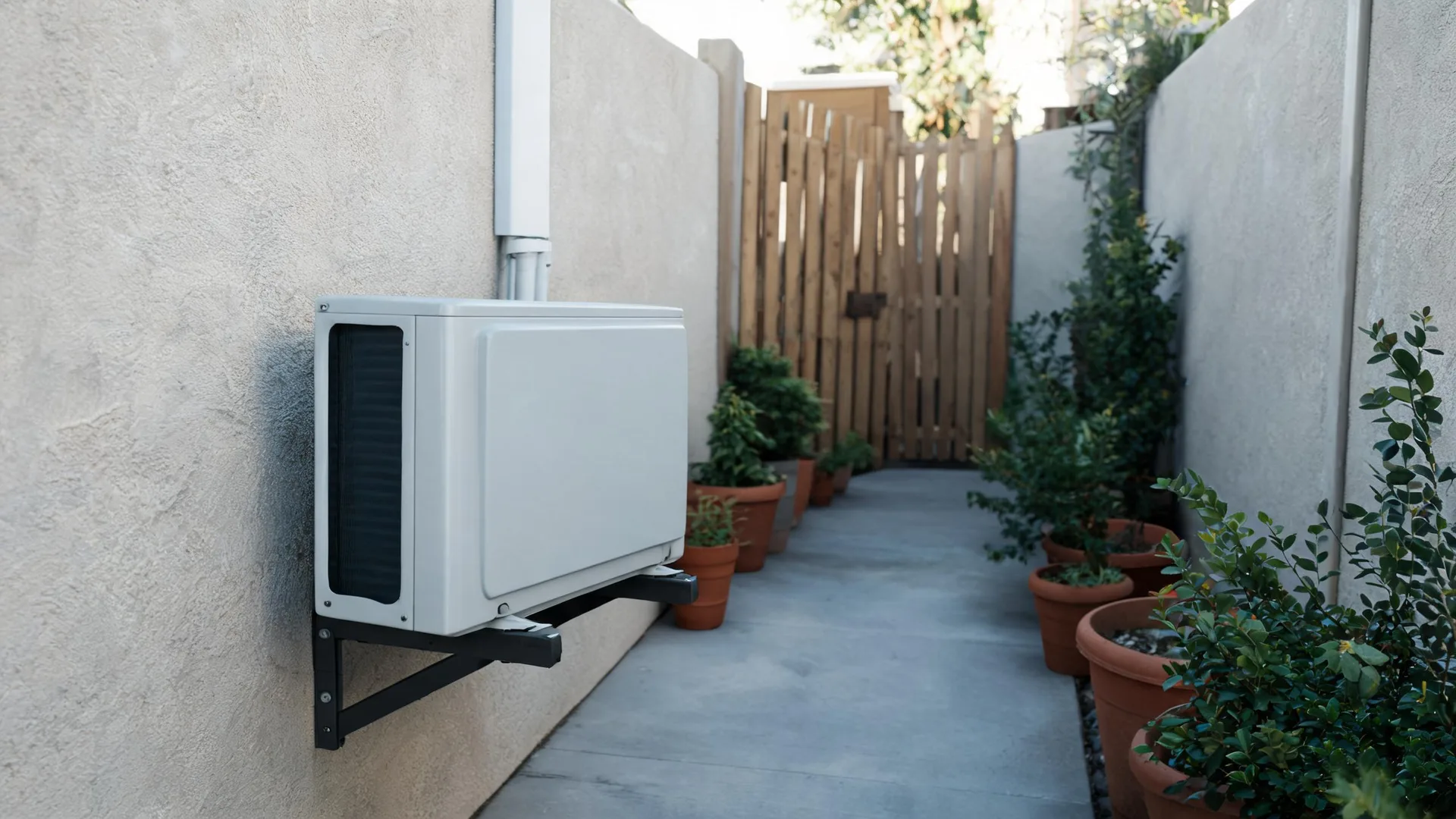
Refrigerant problems don't stay small

A slow refrigerant leak lets the system keep running, just worse than before. A compressor running low on refrigerant runs hotter than it should, and that heat is what damages the windings inside it over time. What starts as a leak that could have been sealed and recharged can end with a compressor that won't run at all if the unit keeps operating low on charge.

Most calls start with the heat pump running but not keeping the house warm, or the air coming out barely warm at all. Sometimes it's the opposite problem. The unit won't stop running, cycling on and off every few minutes instead of settling into a steady stretch. Outside, the outdoor unit might be icing over when it shouldn't, or the fan is spinning but no air is moving through it. Listen for anything new too. A hum with no fan turning. A click that repeats without the system starting. A rattle that wasn't there before. Any of these means something specific failed, not a sign to wait it out.

A diagnostic visit starts outside at the unit. The technician checks whether the fan spins freely and whether the coil is clear. Then comes the electrical side, the capacitor, the contactor, the wiring at the disconnect. Gauges go on the refrigerant lines next, because the pressure readings show whether the charge is right or whether a leak is draining it slowly. Inside, the technician checks the air handler and the thermostat signal. A heat pump that won't switch properly between heating and cooling sometimes has a bad reversing valve rather than a compressor problem. Most of this gets sorted by testing one part at a time until something fails the test.