Why your heat pump fan won't spin in Connecticut

RepairHeat PumpConnecticut
Step 1 of 2

What ZIP code is the job in?

A heat pump fan that won't spin is usually stuck outside, not inside. The outdoor unit sits through Connecticut winters, and when ice builds up on the coil during a cold snap, the fan can freeze solid along with it. A failed capacitor is just as common and has nothing to do with weather. That part gives the fan motor the jolt it needs to start turning, and once it weakens, the motor hums but won't spin. A bad motor itself, a tripped breaker, or a stuck contactor can do the same thing. If it's the indoor fan that's silent, check your thermostat setting and the breaker first. Either way, a heat pump that can't move air can't heat or cool your home, and in a Connecticut summer that means no relief from the humidity until it's fixed.

A gray outdoor heat pump unit on a concrete pad beside a house with gray horizontal siding, with conduit and an electrical box on the wall and a shrub at left.

Why ice jams the fan blade

During a defrost cycle the outdoor fan is supposed to stop on its own for a few minutes while the unit melts frost off the coil. If the defrost control fails, that frost keeps building instead of clearing, and it can lock the blade against the housing. You'll see ice on the grille or coil fins. The fan motor isn't broken; it's pinned in place until the ice is cleared and the control is fixed.

An outdoor air-source heat pump unit with a dark grille stands on a concrete pad beside a white wall and wood-clad facade, surrounded by gravel.

What a failed capacitor looks like

The capacitor gives the fan motor the jolt it needs to start spinning. When it weakens, the motor may hum without turning, or it may start and then stall under load. A technician can test a capacitor's output against its rating in a couple of minutes. With Connecticut power rates among the highest in the country, a motor straining against a bad capacitor is pulling more current than it should for no output.

Why won't my heat pump's outdoor fan spin at all?

A dead outdoor fan during a January cold snap is a different problem than a capacitor that's just worn out, and it changes what a contractor needs to check first. You want to know whether this is something that clears on its own or whether a part has actually failed, because that tells you whether to wait or call someone before the house loses heat.

It's either frozen solid, electrically dead, or mechanically seized

A fan that won't move falls into one of three categories, and they call for different fixes. Ice can lock the blade against the housing, which clears once defrost finishes or fails to clear if the defrost board itself is bad. A failed capacitor means the motor gets power but can't get moving, so it just hums or sits still. Less often the motor bearings seize up after years of running through salt air and winter moisture, and the motor itself needs replacing. A contractor checks the capacitor with a meter and looks at the coil for ice before touching anything else, because guessing at the cause on a heat pump running through a Connecticut winter means the house goes without heat longer than it needs to.

A gray outdoor condenser unit on a concrete pad beside a house with horizontal lap siding, connected by conduit and lines to a wall-mounted disconnect box, with a shrub and gravel bed to the left.

Fan spinning free, coil clear

The unit sits on its pad, lines running up to the disconnect, coil guard clean. Air moves through it the way it should, even on the coldest Connecticut nights, and the fan starts and stops on its own schedule without catching.


An outdoor air conditioner condenser unit on a concrete pad beside a house with horizontal lap siding, with refrigerant lines and a gray electrical disconnect box on the wall, surrounded by bare dirt.

Fan grille packed with grime

Dirt and debris coat the coil guard and grille here. That buildup makes the motor work harder to turn the blade, and it's often what pushes a tired capacitor past the point where it can still start the fan.

A woman with dark hair in a bun wearing a cream knit sweater sits on a gray sofa in a bright living room, looking off to the side.
A woman wrapped in a knit blanket sits on a gray sofa in a living room, looking toward a bright window with houseplants and an armchair in the background.
A woman in a gray cowl-neck sweater sits on a light sofa with cushions, smiling and looking to the side, with a kitchen and window visible behind her.
A woman with dark hair in a bun, wearing a light linen shirt, sits on a sofa and looks to the side, with a window, houseplants and a kitchen with pendant lights blurred behind her.

Get the right pro for your heat pump

A stuck heat pump fan does not fix itself, and running the system while it sits jammed can push a bad capacitor into a failed compressor, which costs a lot more to put right. That matters more here than most places, since Connecticut power rates mean a heat pump working harder than it should shows up fast on the bill, and a system that can't defrost itself will keep icing over on the next cold night. You could spend an evening calling around for someone licensed to work on heat pumps, explaining the same symptoms to each one, then sitting on quotes trying to compare them. Or you could hand that off now. Tell the contractor who reaches out what the fan is doing, or not doing, and let them tell you what they need to see when they get there.

If the fan outside has quit, your heat pump may still run the compressor and blow air inside, so nothing seems wrong until the house won't warm past a certain point or the system ices over hard enough to shut down on its own.

You'll notice it in a room that won't hold its temperature and a unit outside that's either silent or humming without the blade turning, and by then the fix usually costs more than it would have a week earlier.

A smiling older woman with gray hair in a cream knit sweater stands in a dimly lit kitchen beside a window showing snow outside, with a round loaf of bread on the counter in the foreground.
A woman and a child wrapped together in a knitted gray blanket on a couch, with the child's head resting on her shoulder and a lit table lamp and houseplant in the background.

The motor under that round cap on top of the unit has one task: turn the blade and pull air through the coil. Getting it to do that depends on a few parts working in sequence. A run capacitor has to deliver the jolt that starts it spinning, and a weak one leaves the motor humming without enough push to move the blade. The contactor controls power to both the fan and the compressor, and if it sticks, the compressor can keep running while the fan gets nothing. The defrost board adds another layer, since it switches the fan off and on during a defrost cycle, and a failed relay on that board can leave it off for good instead of restarting. Then there's what's happening around the motor itself. Ice packed between the blade and the guard will stop it cold no matter how much voltage reaches it, and a bearing seized inside the housing locks the shaft so it can't turn even with full power behind it. Each of these looks the same from the outside: a fan that just sits there.

What's actually stopping the blade

  • The outdoor fan motor sits under a small round cap on top of the unit, and it only has one job: pull air through the coil.
  • A run capacitor stores the jolt that gets that motor spinning, and when it weakens the motor hums but can't turn the blade.
  • The fan and the compressor share a contactor, so a stuck contact can leave the compressor running while the fan never gets the signal to start.
  • Defrost board relays tell the fan when to stop and start during a defrost cycle, and a failed relay can leave it shut off for good.
  • Ice between the blade and the fan guard will physically stop the motor from turning even when it's getting full power.
  • A seized bearing inside the motor housing locks the shaft in place, and no amount of voltage will turn a seized shaft.
A gray outdoor condenser unit on a concrete pad beside a light-colored lap-sided house, with a wall-mounted disconnect box, refrigerant lines, mulch bed and shrubs, and a concrete walkway in the foreground.
A clean coil guard, clear fan blade, and a unit far enough from the siding to pull air freely through the coil.
An outdoor air conditioner condenser unit with rust spots on its top grille sits on a concrete pad beside a house with light horizontal siding, with conduit lines and an electrical box on the wall and a mulch bed to the right.
Rust on the grille and dirt packed around the base, the kind of wear that strains a motor already working to keep up.

Power costs 29.31 cents per kilowatt-hour statewide

At 29.31 cents per kilowatt-hour, a heat pump forcing air through a jammed or frozen fan draws more power to do less heating. Leave it stuck and that shows up on your bill before anyone spots the real problem outside.

EIA-861 2025 statewide residential average

A woman in a cream sweater and jeans stands in the open doorway of a white stucco house, holding the dark door, while a man in a dark quilted jacket seen from behind walks toward the entry past potted plants.

A jammed fan outside, a cold spot inside

A heat pump fan that won't turn is almost always ice, a weak capacitor, or a motor that's seized up outside in the cold. Whichever it is, the fix means someone opening the outdoor unit, checking the capacitor's charge, and seeing whether the motor still turns free once the ice is gone. That's a job for a contractor who works on heat pumps in Connecticut winters, not a guess from inside the house.

Getting to that point usually means calling a few places, explaining the same problem each time, and waiting to see who actually shows up when it's cold out. Once you're matched with a contractor who handles this kind of repair, that part is done. They'll have what you've already described and reach out to you directly, so the next conversation is about fixing the fan, not finding someone willing to look at it.

A gray upholstered sofa with a matching cushion sits beside a potted plant and a wooden table holding a small green plant in a stone pot, near a curtained window.
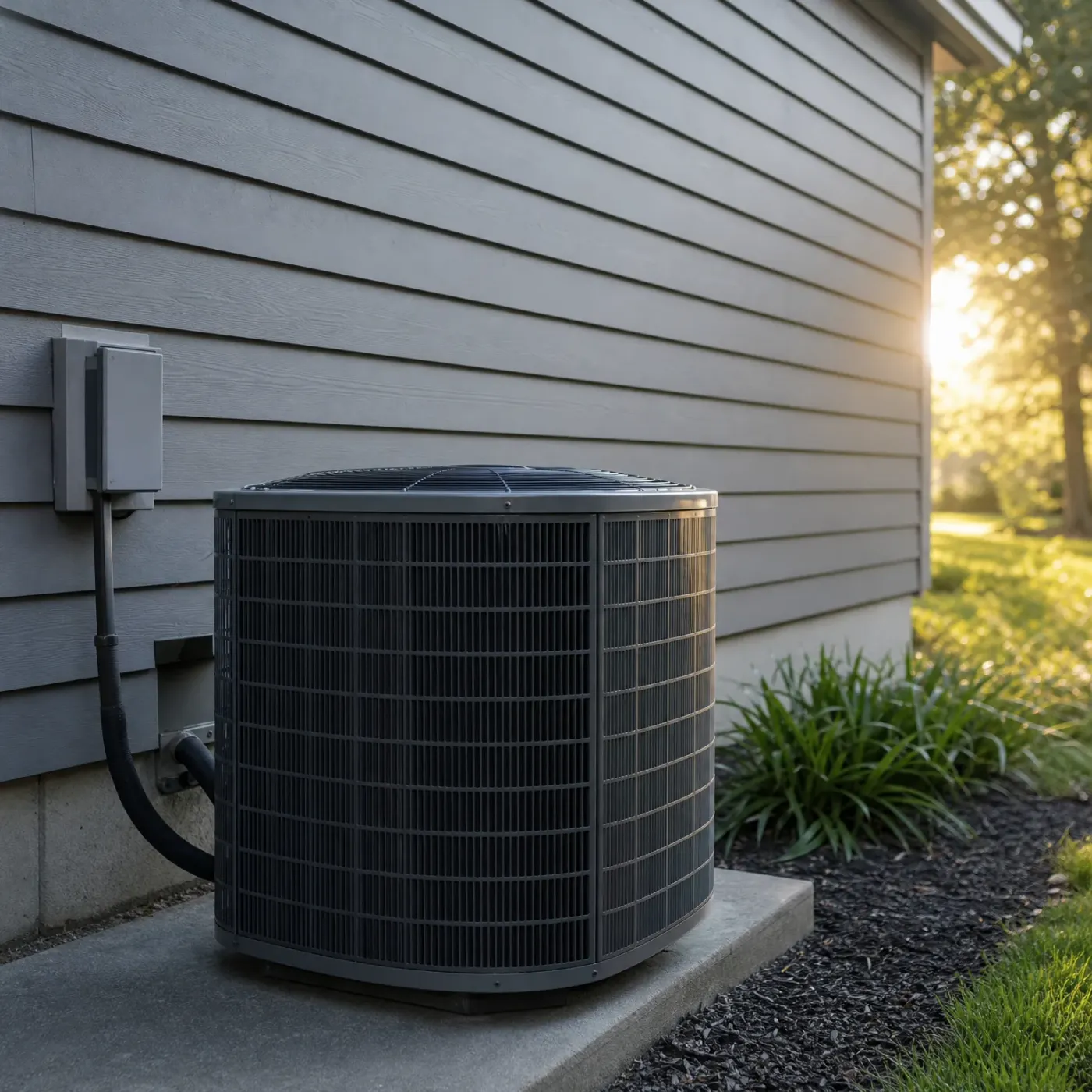
An outdoor air conditioner condenser unit on a concrete pad beside a gray horizontal-lap-sided house, with an electrical disconnect box and refrigerant line on the wall, grass, shrubs and a tree with low sun behind.

A pro who works on heat pumps

Start one form

Describe your heat pump job once, to one pro.

You're not committing to anything by asking.