Why your heat pump is leaking water in Connecticut
A heat pump leaking water is usually just condensation that isn't draining where it should. Your indoor coil pulls moisture out of the air, and that water is supposed to run off through a drain line into a pan or outside. When that line clogs with algae or dirt, or the pan cracks, the water backs up and comes out somewhere in the house instead. Connecticut summers run muggy, so the coil is pulling a lot of moisture out of the air on a typical July or August day, which means a clogged line shows up fast once it stops draining. In winter, water around the outdoor unit can mean something different: ice built up on the coil that's melting as the unit defrosts. Either way, the leak itself isn't the real problem. It's a sign something in the drain path or the defrost cycle needs a look before it causes water damage or the system shuts itself down.


In cooling mode, your indoor coil can pull several gallons of water out of the air on a humid Connecticut day. All of it needs somewhere to go.
If the drain line is blocked or the pan has cracked, that water has nowhere to go but onto your floor or down through the ceiling below.





Humid air crosses the cold indoor coil and gives up its moisture.
Condensation collects in the drain pan under the coil.
Water should flow out through the condensate drain line.
Algae, dirt, or a cracked pan block that path.
Clogged Line or Cracked Part
Clogged drain line
- Algae and dirt build up inside the drain line over time, especially when the system runs for months straight through a Connecticut summer.
- Water backs up past the clog and spills over the drain pan instead of leaving the house.
- A wet or musty spot near the indoor unit often shows up before you notice any drop in cooling.
- Clearing the line is usually a quicker visit than a repair involving the coil or the pan itself.
- Left alone, the backup can soak into a subfloor or ceiling below the unit.
Cracked pan or coil problem
- A drain pan cracks with age, and once it does, water drips straight through instead of draining away.
- A dirty or frozen coil can thaw and shed more water than the pan and drain line were built to handle at once.
- This points to a part that needs replacing, not just a line that needs clearing out.
- Ice on the coil before a leak shows up usually means airflow or refrigerant is the real issue.
- A cracked pan tends to leak steadily rather than only after the system has run for a while.

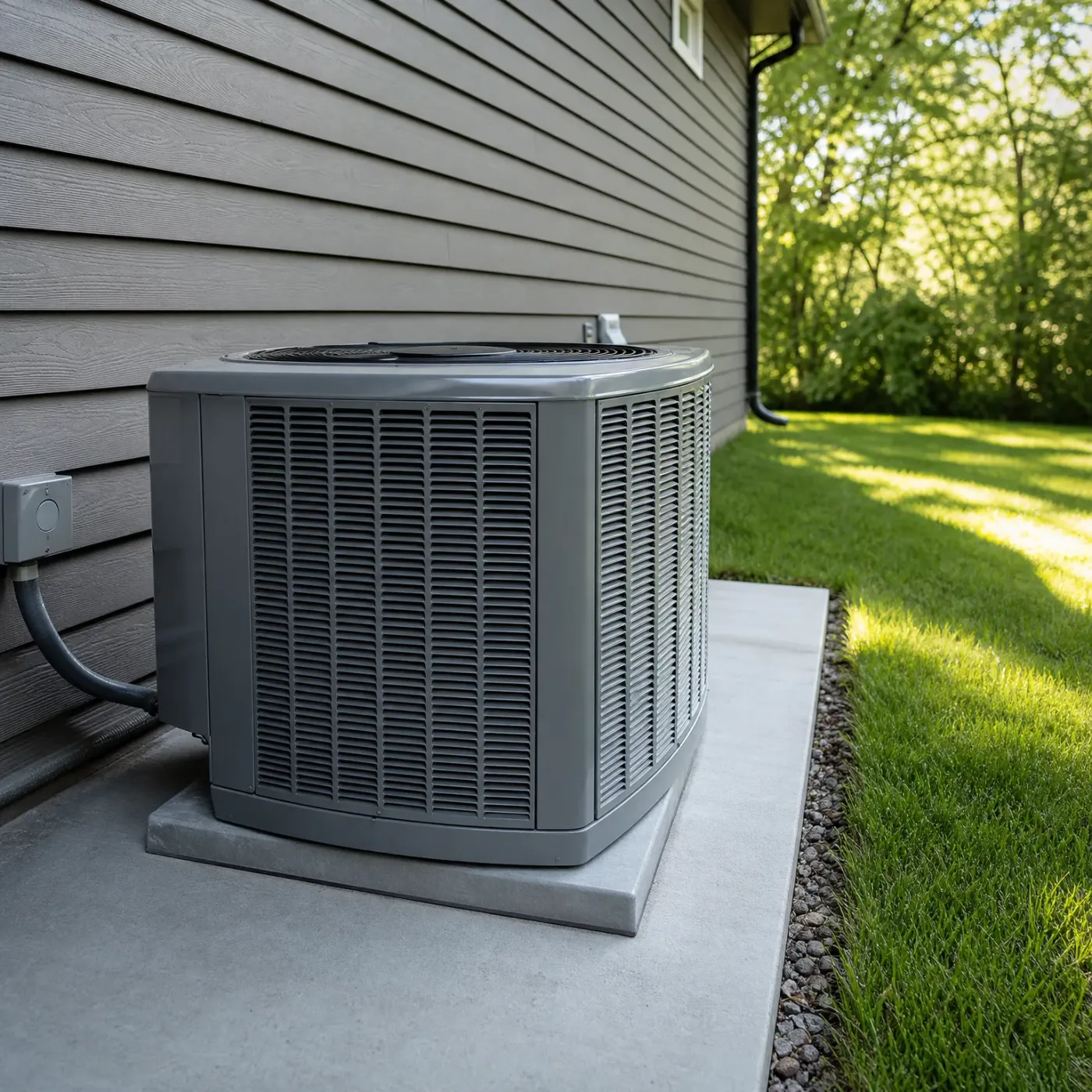
It is just past seven on a January morning, still dark at the edges of the yard. You go out to check the outdoor unit because the house felt off overnight, never quite reaching the temperature you set. The fan is silent. A half inch of ice coats the coil and the cabinet sides, thick enough that you can see it glinting under the porch light. Frost has crept into the grille slats. You crouch down and notice a thin line of water running from the base of the unit into the snow, already freezing again where it meets the cold air. The unit hums for a second, then stops.
Let someone else find the pro

One form replaces the calls you'd make to find a heat pump pro.
No fee to send it, and nothing to sign.
If you let it keep leaking
The water usually finds the same path every time, so it keeps landing on the same spot of subfloor or ceiling below. A pan that overflows once will overflow again on the next humid stretch, because the clog or crack that caused it doesn't clear itself. Left alone, that repeated soaking can warp flooring, stain a ceiling, or rot the wood underneath. Some systems have a float switch that shuts the unit off when the pan fills, which stops the leak but also stops your cooling on the next ninety-degree day. Either way, the underlying blockage is still there waiting.
Once it's fixed
A contractor clears the drain line, repairs or replaces a cracked pan, and checks that the line pitches the right way so water actually runs downhill and out instead of pooling. With the path clear, condensation leaves the house the way it's supposed to, and the pan stays dry even on the stickiest August afternoon. You stop checking the floor under the indoor unit every time you walk past it. Sending the form means you're not the one calling around to find who handles this or explaining the leak over and over. That part becomes someone else's job, not yours.
Power costs 29.31 cents per kilowatt-hour statewide
At 29.31 cents a kilowatt-hour, running a heat pump that's leaking and working harder than it should costs more here than almost anywhere else. A clogged drain line doesn't just mean water on the floor. It means the system straining to keep up, and you paying for that strain every month.
EIA-861 2025 statewide residential average
What the leak comes down to
- Water pooling near your indoor unit almost always traces back to a clogged drain line or a cracked pan, not a refrigerant problem.
- A Connecticut summer keeps the system running long enough that algae and dirt have months to build up inside that drain line.
- Ice on the outdoor coil in winter points to a different cause, and it can also end as a puddle once it melts.
- Left alone, the same spot of flooring or ceiling takes the damage every time the system runs.
- The fix itself is usually straightforward once a contractor clears the path or replaces the cracked part.
- Finding that contractor, checking licenses, and getting quotes is the part that eats your evening, not the repair.
Water showing up where it shouldn't has a cause, and almost always it's a mechanical one. Something is blocking the path that condensation is supposed to take, whether that's a drain line clogged with algae after a long Connecticut summer of steady runtime, or a pan that's cracked and can't hold what the coil collects. Winter changes the picture some. Ice built up on the outdoor coil melts and pools too, but that points to a different problem than a summer leak does, and it's worth telling a contractor which season you're seeing it in. What doesn't change is what happens if it sits unaddressed. The water takes the same route down to the same spot of subfloor or ceiling every time the system runs, and that spot absorbs the damage again and again until the clog or crack gets dealt with. The repair itself tends to be a known job for someone who does this, clearing a line or swapping a pan rather than chasing down something more involved. What actually costs you time is everything before that: finding a contractor who works on heat pumps, checking that they're licensed, calling a few around to see who can come out, and explaining the same leak and the same symptoms to each one before you even get a quote to compare. That part is the one that eats an evening. Once you've sent a request through, that search is off your plate, and the repair is what's left to schedule.