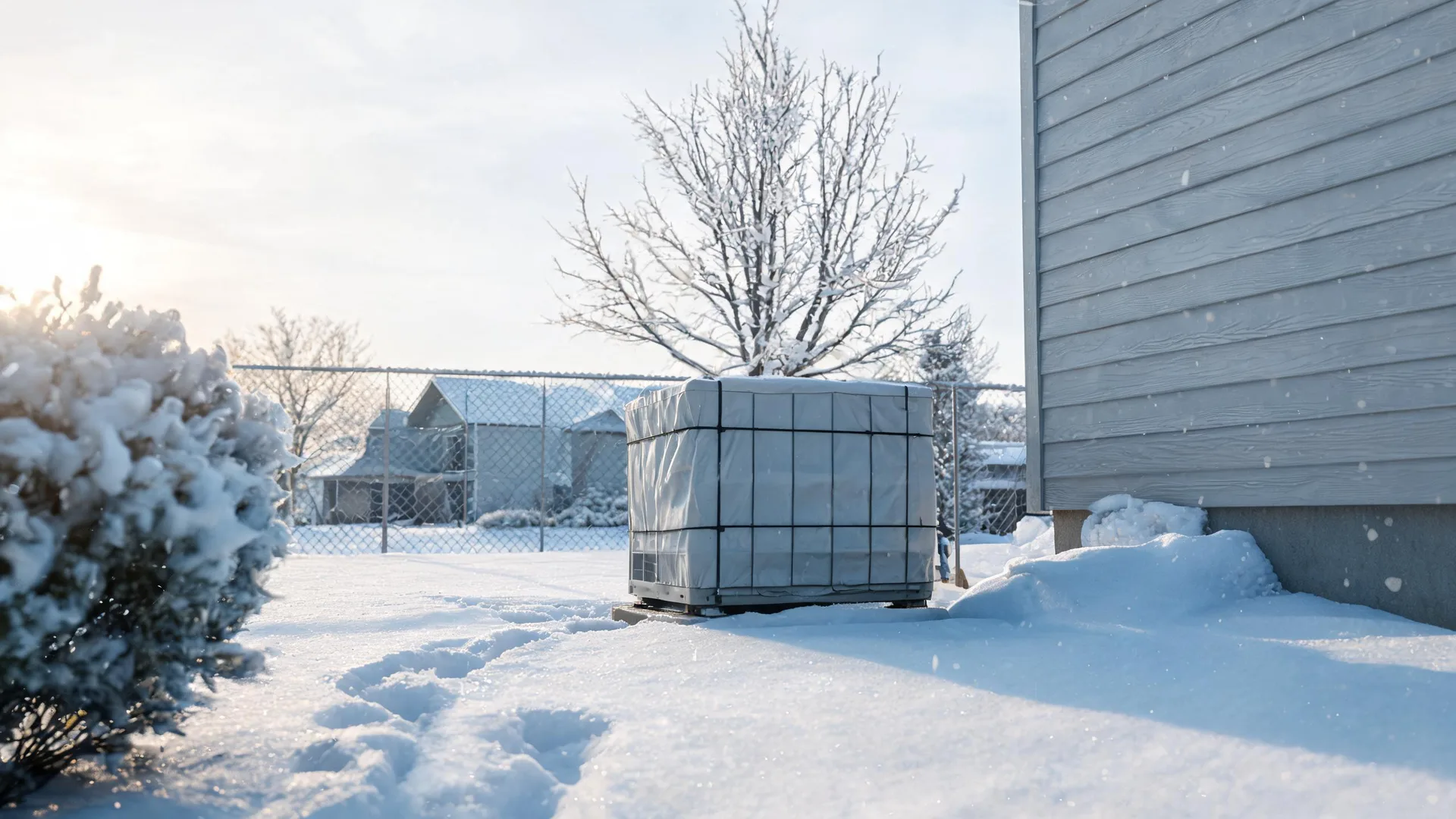
October is when heat pumps show their weak spots
Heat here switches on in October after sitting idle since spring. A heat pump that was already struggling will usually fail right when it has to take on real load for the first time, not before.

Takes about a minute. No obligation.
Heat here switches on in October after sitting idle since spring. A heat pump that was already struggling will usually fail right when it has to take on real load for the first time, not before.
If your heat pump has been off all summer, run it now before you need it every day. A problem caught in September is a quick fix. The same problem found in October, when it's actually cold, means days without heat while you wait for a repair.

NOAA 1991–2020 monthly normals
Winters here hit a 17°F average overnight low, which is cold but not extreme as far as a heat pump's workload goes.
A heat pump in Torrington isn't fighting the kind of cold that wears out a compressor fast, so most repair problems come from age or a part that failed, not from the system being run into the ground.



Half the homes in this part of Connecticut were built in 1967 or earlier. A heat pump doesn't last that long, so if yours came with an older house, what's out there now is a replacement, maybe more than one replacement in. Nobody but the contractor who installed it knows its real age unless you still have the paperwork. That matters more than whatever's wrong with it right now. A repair on a unit with years of life left is worth paying for. The same repair on a unit near the end of its run might be better spent on a new system. Ask the contractor straight out how many years they'd expect to get out of it before you pay for the fix.
Electricity here runs 28.75 cents per kilowatthour, more than most states pay. A heat pump with a failing part doesn't need harsh weather to cost you. A bad capacitor, a low charge, a stuck reversing valve, any of it makes the system work longer to do the same job, and you pay for every extra minute on a rate this high.
Find a contractorIt still has to run from whatever outdoor temperature it finds outside, down to 17°F on a cold night. That's a real spread, just not a brutal one. If a repair estimate comes back reasonable, it's worth paying for, because the compressor underneath isn't fighting the kind of cold that cracks parts or burns out motors ahead of schedule.
A heat pump low on refrigerant has to run its compressor harder to pull the same warmth out of the outdoor air. Run it that way for weeks and the compressor runs hotter than it should on every cycle, until the fix isn't sealing a leak anymore, it's replacing the compressor.
A bad capacitor makes the motor it starts draw more current than that motor is built for. A clogged coil makes the whole system run longer to reach the same set temperature. Left alone, the strain spreads from the part that's failing to the parts working around it, and the repair gets bigger the longer it sits.
Most heat pump failures start with something small that gets ignored. A capacitor weakens and the compressor or fan motor starts drawing more current to compensate, until the motor itself burns out. A contactor pits and sticks from years of cycling on and off, and the system either won't start or won't stop. Refrigerant leaks out slowly through a worn fitting, so the system keeps running but moves less heat each month until it's barely working at all. A reversing valve can stick partway, which shows up as heat when you wanted cooling or the system running nonstop without getting there. None of these start as emergencies. They start as a system working a little harder than it should, for a little longer than it should, until something gives out.
A diagnostic starts outside at the unit itself. A tech checks refrigerant pressure, looks at the coil for ice or buildup, and listens to the compressor run. Inside, they'll pull the cover off the air handler and test the capacitor and contactor with a meter rather than guessing from how they look. They'll check the reversing valve by switching the system between heat and cooling to see if it actually responds. Airflow gets checked too, because a weak return or a dirty filter can mimic a failing part. The goal is to find which component is out of spec, not just which one is old, so the repair fixes what's actually wrong instead of the first thing that looks suspect.