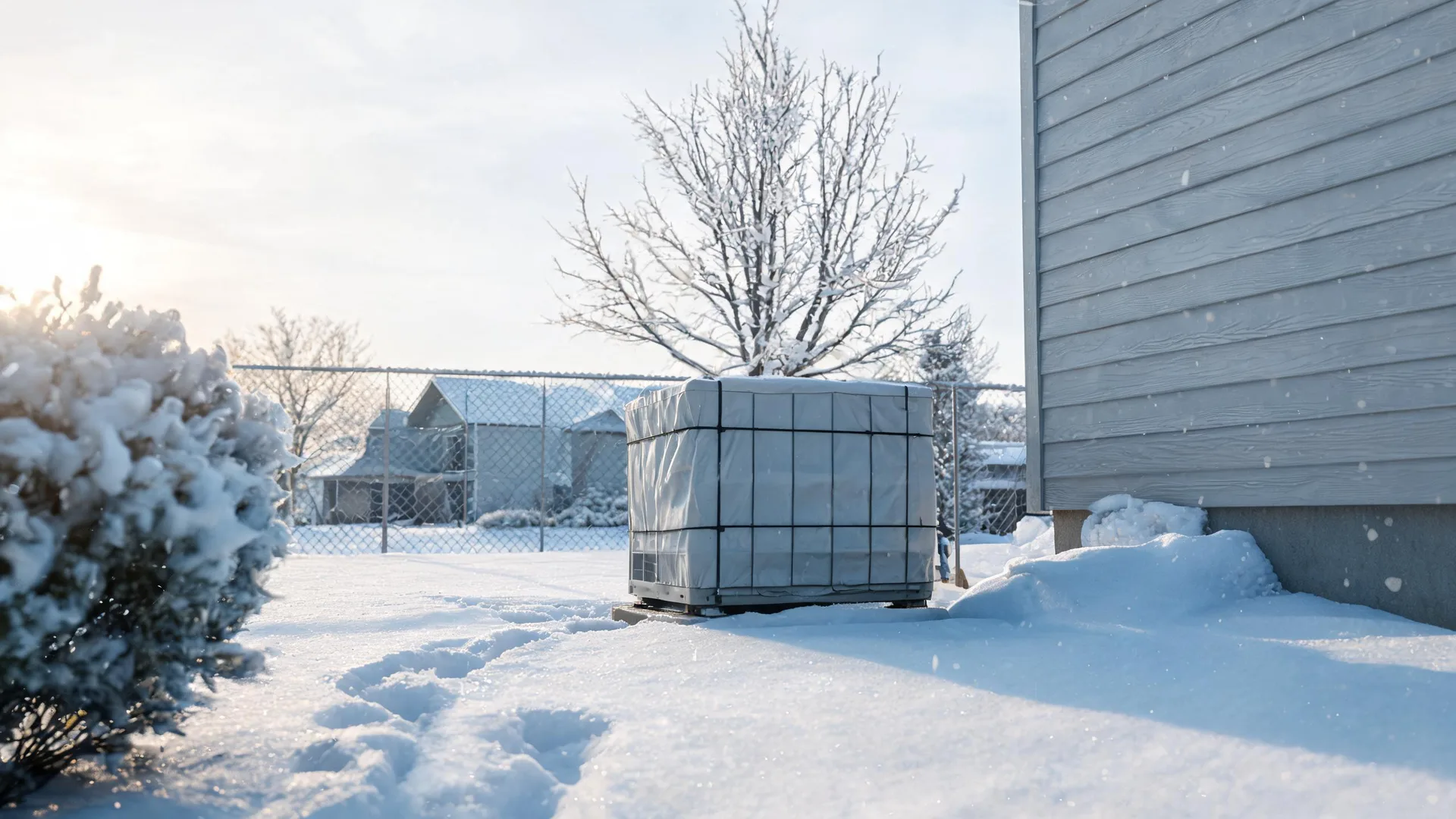
Winters here aren't extreme
Overnight lows in this region average 22°F through December, January and February. A heat pump doesn't have to fight the kind of deep cold that wears out compressors and coils faster.
Takes about a minute. No obligation.
Overnight lows in this region average 22°F through December, January and February. A heat pump doesn't have to fight the kind of deep cold that wears out compressors and coils faster.
When a heat pump here breaks down, it's rarely because the system was pushed past what it's built for. Look at how old it is and whether it's been serviced. That's usually where the answer is.
NOAA 1991–2020 monthly normals
A heat pump blowing air that never feels warm is losing the reversing valve or the charge, not just running behind.
A low charge left alone can take the compressor down with it, so that's worth a repair call now.




About 20% of Connecticut households lost power for at least a full day in 2024. A heat pump doesn't have its own backup, so when the power drops, it stops. Most units start back up on their own once power returns. If yours didn't, that's probably not storm damage to the system. Check the breaker panel first, and check that the thermostat still has its settings. That's a simpler fix than most people expect.
A heat pump that hasn't spent the winter fighting hard cold is usually still sound underneath whatever's gone wrong. That's why it's worth getting a real diagnosis instead of assuming the worst.
Find a contractor
If your heat pump came with the house, ask the contractor how old it actually is before you agree to a repair. Half the homes in this area were built in 1971 or earlier, so a lot of systems here have already had a long run. That's not a reason to assume the worst. It's a reason to find out what you're actually working with before the diagnosis starts.
Make sure it's set to heat, not auto or cool, and that the set temperature is actually above room temperature. A battery running low can reset the schedule or drop the display, so swap the batteries before you call anyone.
Walk outside and check that the outdoor unit isn't buried in leaves, ice or snow. Airflow has to move through those coils for the system to move heat at all. If the fan isn't spinning or the coil is caked in ice, that's worth mentioning when you describe the problem.
A refrigerant leak is the clearest case. A heat pump low on charge will keep running, but the compressor starts working harder to move heat with less refrigerant doing the job. Run it like that for a few weeks and the compressor can fail outright, and a compressor failure means a very different repair than a leak caught early. Ice on the outdoor coil is similar. A little frost clears in normal defrost cycles, but a coil that stays iced over blocks airflow, and the system keeps trying to pull heat through it anyway. That strain goes somewhere, usually the compressor or the fan motor. The fix early on is often small. Left running, it isn't.
A diagnostic visit starts outside, not with a toolbox. The contractor checks the reversing valve, the refrigerant charge, and the defrost cycle before touching anything, because those explain most heat pump complaints. They'll run the system in heat mode and feel the line sets, check for frost patterns on the coil, and listen to the compressor under load. A lot of that tells them something before a single panel comes off. Gauges go on next if the charge is in question, since that's the only way to know if refrigerant is low or if something else is making the air feel cool. The point of the visit is to find out which part is actually failing, not to start swapping things and see what helps.