




White colonial houses with lit windows and dark shutters line a tree-lined street at dusk, bordered by dry-stacked stone walls.

Heat Pump Repair in Norwich, CT

Tell us about the job

Takes about a minute. No obligation.

RepairHeat PumpSoutheastern Connecticut Planning Region, CT
Step 1 of 2

What ZIP code is the job in?

Heat pumps in this part of Connecticut work hard, with heat running October through May and cooling picking up right after in June. That October switch is when a lot of repair calls come in. A heat pump that sat idle most of the summer gets asked to produce heat again, and whatever was marginal in the spring, a weak capacitor, a failing contactor, a refrigerant leak that was small enough to ignore, shows itself under that load. September is worth a checkup for that reason. If a unit is already struggling before the season turns, waiting until the first cold week to call someone means waiting with no heat.

8 months
October through May, your system heats
3 months
June through August, it cools
24°F
the average winter night it heats against
80°F
the average summer afternoon it cools against
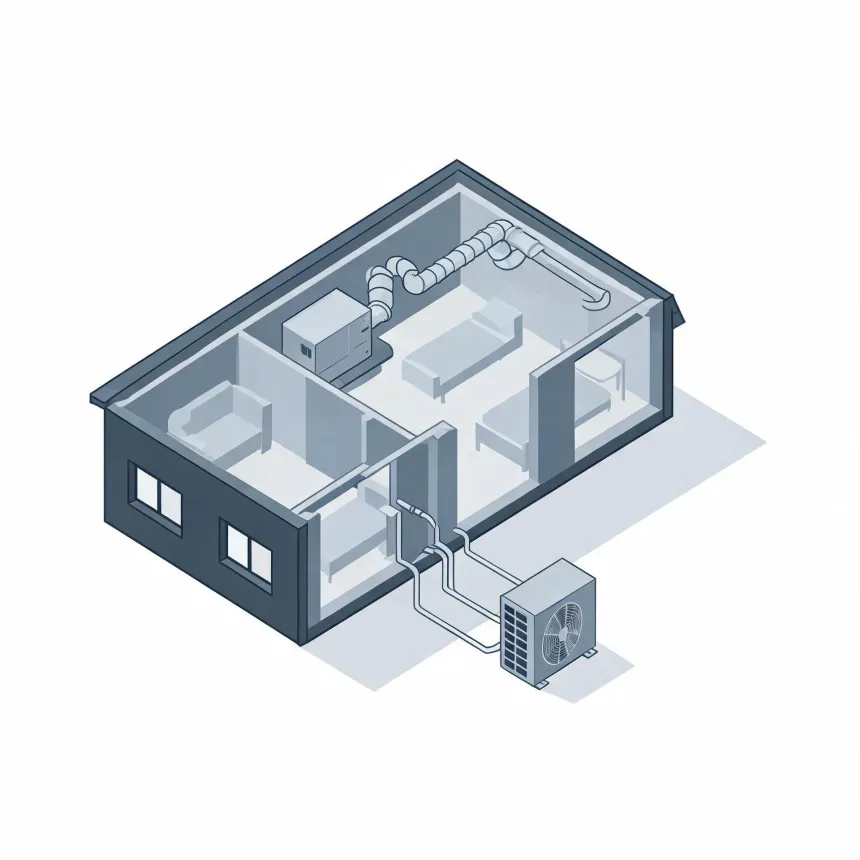
Isometric cutaway illustration of a small house showing interior rooms with furniture, an indoor air handler with flexible ducting, and refrigerant lines running to an outdoor condenser unit beside the building.
Your system heats October through May and cools June through August.

NOAA 1991–2020 monthly normals

Winter nights here average 24°F.

A heat pump built for that doesn't wear out from the cold. It wears out from age or a problem nobody caught.

20% of Connecticut lost power a day or more last year. That trips a heat pump's breaker, it doesn't damage the unit.

20% of homes statewide lost power a day or more in 2024
Winter nights average 24°F
Power costs 28.75 cents a kWh statewide

Worth fixing, most likely

24°F nights don't break a heat pump that was built for them. If yours is acting up, the cause is more likely age or something that got missed than the cold doing its job. Get it looked at before guessing it needs replacing.

Find a contractor
A gray air-source heat pump mounted on a concrete pad next to a house with gray vinyl siding, surrounded by gravel and flanked by green shrubs and white hydrangea flowers.

Ask what the repair buys you

If your heat pump came with a house built in 1969 or earlier, ask the technician how many years it likely has left before you agree to a repair. A compressor or coil replacement is a different decision on a unit near the end of its life than on one with years still in it.

A refrigerant leak gets worse, not better

A heat pump low on refrigerant makes the compressor work harder to move heat through the system. Run it that way for weeks and the compressor can overheat or fail outright, turning a leak repair into a compressor replacement.
A failing part rarely fails alone

A weak capacitor makes the motor it starts draw more current than it should. Keep running the motor on a bad capacitor and the windings can burn out. What started as one bad part turns into a bad part and a dead motor.

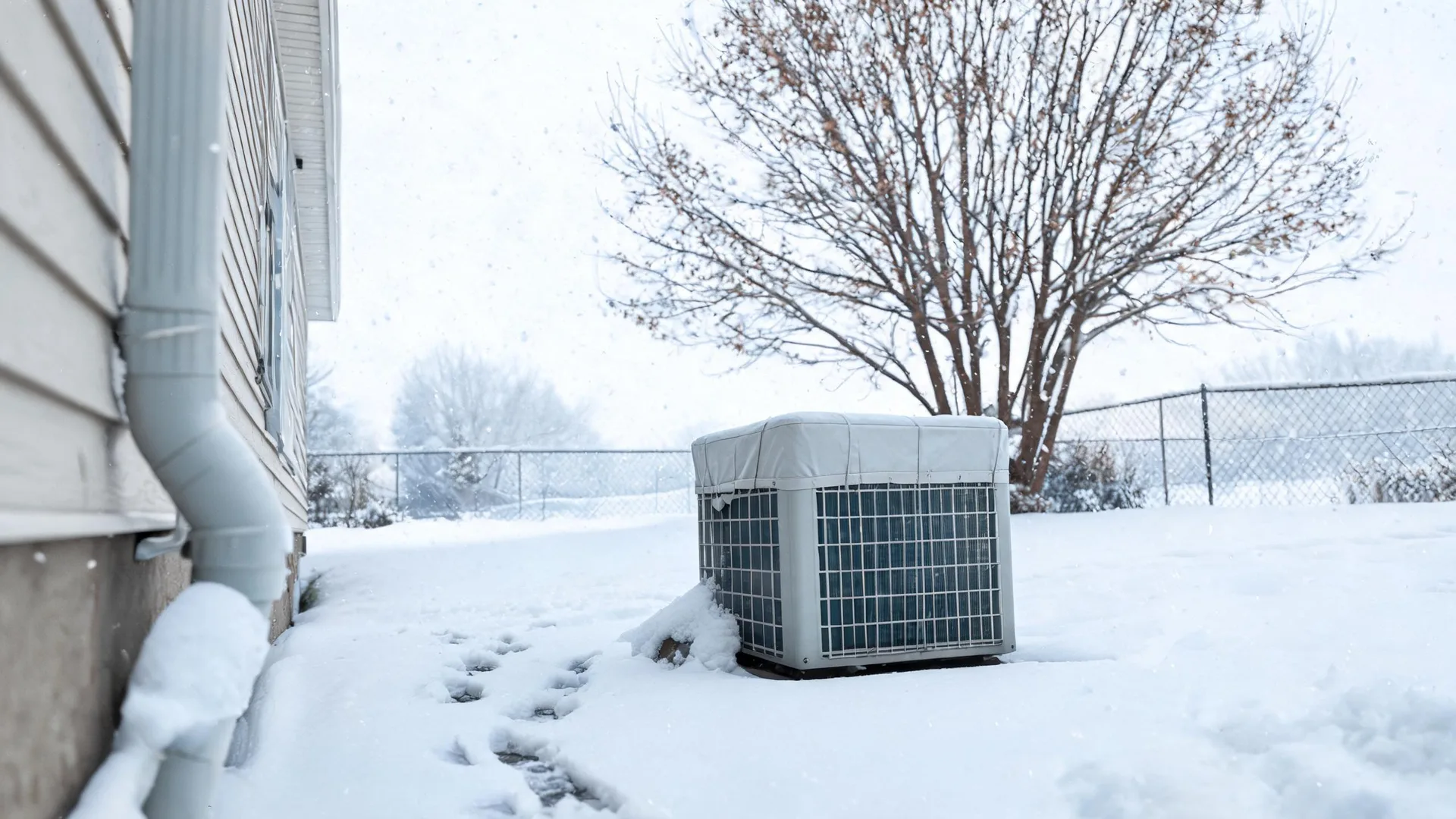
Before calling anyone, look at the outdoor unit. Is it buried in leaves or has ice built up over the coil, not just a thin frost but a solid sheet? Clear away debris, but don't chip at ice by hand. Inside, check the thermostat is set to heat and the batteries aren't dead, and check the air filter. A clogged filter starves the system of airflow and can make a heat pump run constantly without warming the house. Look at the vents and registers too, and make sure none are closed or blocked by furniture. If the system is running but the air coming out feels cool rather than warm, that's worth mentioning to the technician, since it points toward the refrigerant side rather than something you can fix by clearing a vent.

A diagnostic visit starts outside at the unit itself. The technician checks the coil for ice or damage, checks the fan, and looks over the refrigerant lines before opening anything up. Gauges go on next to check refrigerant pressure. Too little tells them there's a leak somewhere and gives them a place to start looking. Electrical testing comes after that. The capacitor, the contactor, the wiring to the compressor, each one gets checked against what it should read, not judged by how the unit sounds. Indoors, they'll look at the air handler, the filter, and airflow at the registers. A heat pump can test fine outside and still leave the house cold if the air isn't moving through it. A good technician also runs the system through a defrost cycle, since some problems only show up when the unit switches modes. By the end, they're naming a part or a cause, not guessing at one.