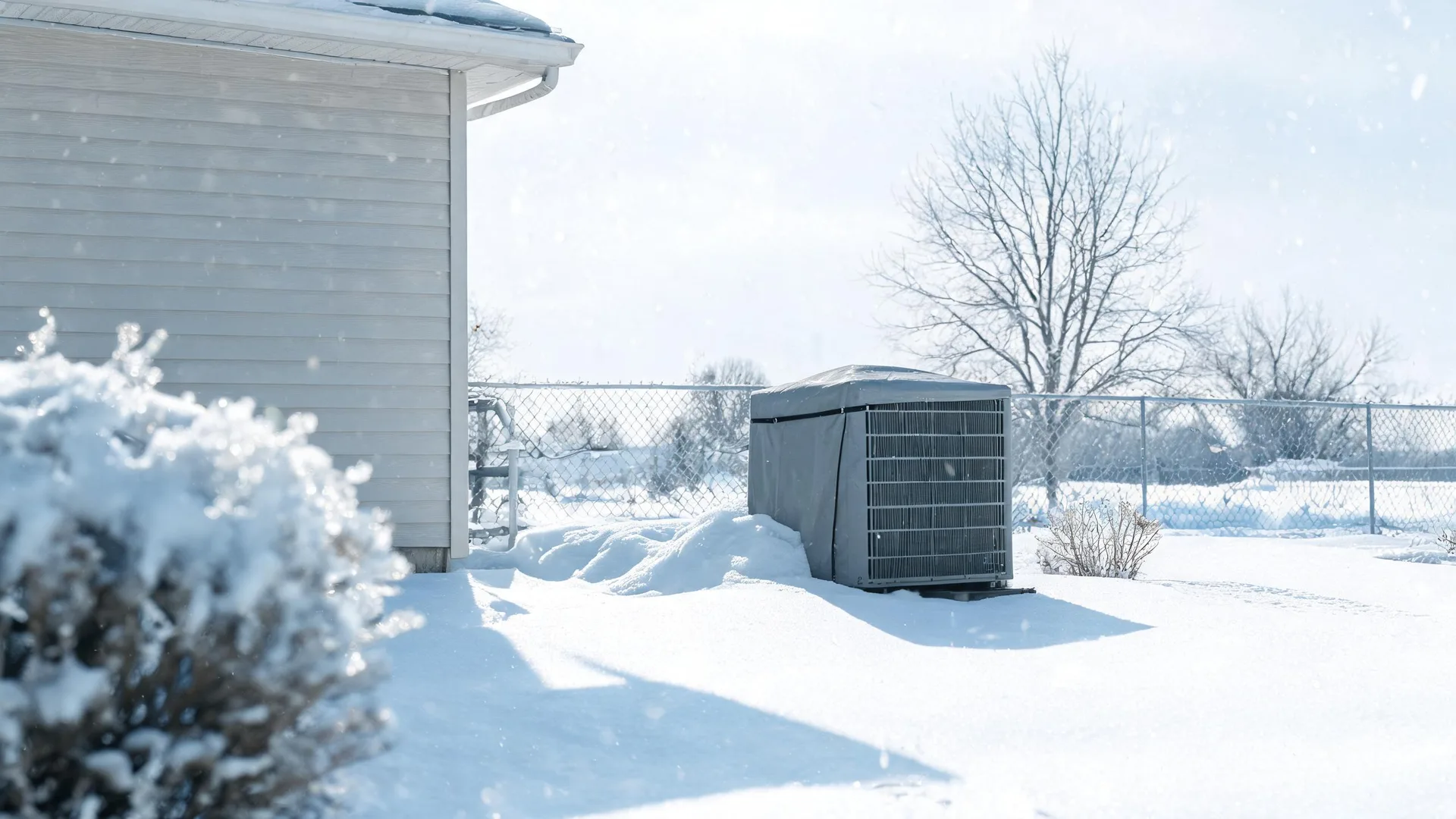
Winters here don't push a heat pump that hard
Overnight lows around New Haven average 25°F through December, January and February. That's cold, but it's not the kind of extreme a heat pump has to fight for months on end.
Takes about a minute. No obligation.
Overnight lows around New Haven average 25°F through December, January and February. That's cold, but it's not the kind of extreme a heat pump has to fight for months on end.
A heat pump that hasn't been run into the ground by brutal cold is more likely suffering from age or a specific worn part than from years of strain. That's the kind of problem a repair actually solves.

NOAA 1991–2020 monthly normals
Heat here runs October through May, about eight months a year.
September is worth a call if your heat pump is already acting up, before the first cold morning finds the weak part.



Half the homes around New Haven were built in 1964 or earlier. The houses being old doesn't tell you anything about the heat pump itself, since it's rarely original to the house. But if yours has been there a long time, it's worth asking how old the unit is. Heat pumps have a working life, and one that's reaching the end of it can start acting up the same way a specific worn part would. A contractor can look at the unit and tell you which one you're dealing with, and how many years it likely has left before you put money into fixing it.
A fifth of Connecticut households lost power for a day or more in 2024. If your heat pump stopped after an outage, it likely just needs to be reset or checked over, not replaced. Same goes for most other problems it's showing. Get the actual cause found before you assume the worst.
Find a contractorThat 25°F average is the number a technician works with, year after year. It's not a system that spends the winter fighting its limits. If your heat pump has been running this long without trouble, the parts inside have had a fair run, not a brutal one. So when something does go wrong, it's worth getting looked at rather than written off.
A heat pump that runs nonstop but never quite reaches the thermostat setting is losing ground somewhere. It could be low refrigerant, a failing compressor, or a reversing valve stuck between modes. The unit isn't resting between cycles because it can't finish one.
A heat pump that kicks on, runs a couple minutes, then shuts off and starts again is putting a hard restart on its compressor every time. That pattern points to a bad sensor, a dirty coil, or an electrical fault. The longer it runs this way, the more that compressor takes the hit.
A heat pump with a stuck reversing valve or a weak compressor will keep heating, just worse than it should, and that's what makes it easy to put off. The unit is still blowing warm air, so it doesn't feel urgent. But a compressor working against low refrigerant or a bad start capacitor strains every time it cycles, and that strain adds up. What starts as a failing sensor or capacitor can end with a failed compressor, since the compressor is what every one of those bad cycles was leaning on. A refrigerant leak behaves the same way. Left alone, it doesn't just cut down on heat, it lets the compressor run short on lubricant, and that wears the compressor down faster than the leak itself ever would. The part struggling now is usually the easier one to deal with, before it takes the compressor down with it.
A diagnostic starts outside at the unit itself. The technician checks refrigerant pressure, looks at the reversing valve, and watches how the compressor starts and runs. Indoors, they check airflow across the coil and compare what the thermostat is calling for against what the system is actually doing. Electrical readings come next. Amp draw on the compressor, continuity on the sensors, the condition of the capacitor. Most of this gets done with gauges and a multimeter, not guesswork. By the end, the problem usually has a name, not a guess.