






A new wooden picket fence runs along a grass lawn in front of a row of similar two-story houses with gabled roofs and light siding, under large leafy trees.

Heat Pump Repair in Hartford, CT

Tell us about the job

Takes about a minute. No obligation.

RepairHeat PumpCapitol Planning Region, CT
Step 1 of 2

What ZIP code is the job in?

A heat pump that needs a repair every year is telling you something, especially once the compressor is the part acting up. The compressor is the most expensive part to replace and the most expensive part to fail. If a contractor finds the compressor itself is failing, replacing the whole unit is usually the better call rather than sinking money into that one repair. Smaller problems are a different story. A bad capacitor, a failed contactor, a low refrigerant charge from a slow leak, these are normal wear items and fixing them is usually the right move on a system that otherwise runs fine. Age matters too. A heat pump nearing the end of its expected lifespan that needs a major part is in a different spot than a newer system with the same failure.

8 months
October through May, your system heats
3 months
June through August, it cools
21°F
the average winter night it heats against
81°F
the average summer afternoon it cools against
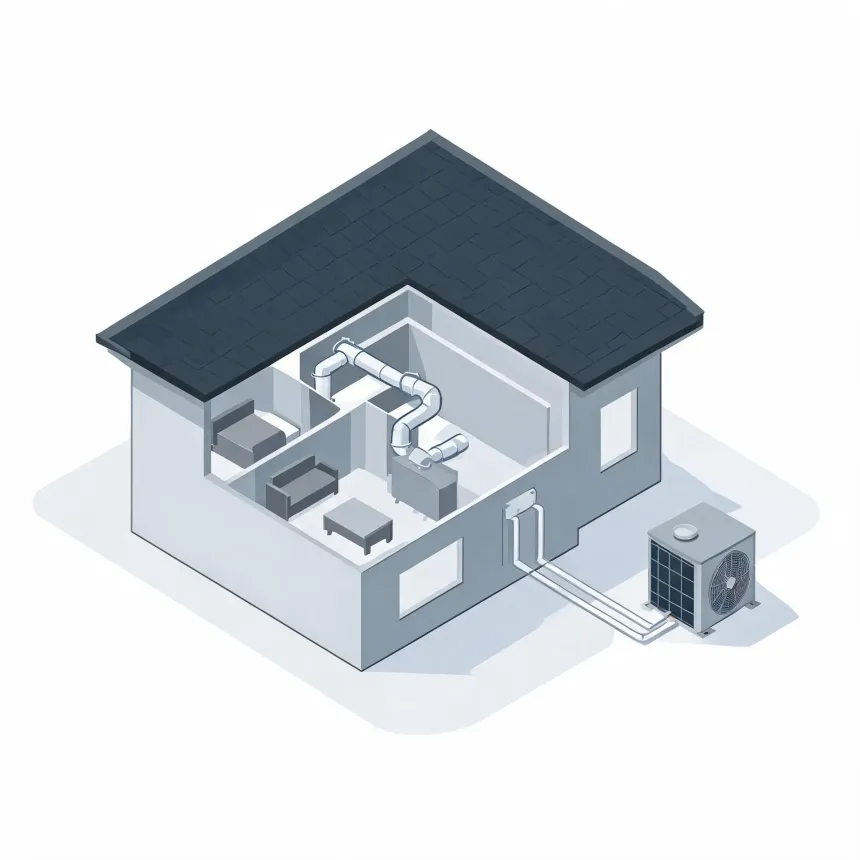
Isometric illustration of a cutaway single-story house showing interior ductwork, an indoor air handler and simple furniture, connected by lines to an outdoor condenser unit beside the building.
Your system heats October through May and cools June through August.

NOAA 1991–2020 monthly normals

Winter nights average 21°F here, not well below zero.

A heat pump in Hartford isn't fighting extreme cold for months, so a repair is usually worth doing.

Half the homes here were built by 1966, old enough that the heat pump might be too

Half the homes here were built by 1966
Winter nights average 21°F
Power costs 28.75 cents a kWh statewide
Electricity here costs moreConnecticut homes paid 28.75 cents per kilowatthour in 2024.

Hartford doesn't put anything extra on a heat pump. It's not coastal salt air and it's not months of hard freeze. The one thing worth knowing is about the power, not the machine. 20% of Connecticut households went at least 24 hours without power in 2024. A heat pump that sat off that long needs nothing special when power comes back. Most units restart on their own, and if yours doesn't, that's worth a call too, but it usually isn't the heat pump itself that failed.

A repair here is usually worth making

Get the actual cause checked before you decide it's not worth fixing. A capacitor, a contactor, a low charge from a slow leak, these are quick calls on a system that hasn't had to fight real cold. Only a failing compressor changes that math.

Find a contractor
A man in a worn dark jacket and tan pants, seen from behind, climbs porch steps toward a dark green paneled front door while carrying a canvas tool bag holding a hammer and other tools, with a potted conifer shrub to the right.
A gray heat pump condenser unit mounted on a concrete pad against the gray lap-siding exterior wall of a house.

Ask how old the unit is, not just the house

If the heat pump came with the house, ask the contractor how old the unit actually is before paying for this repair. That matters more here than most places, since half the homes in the region were built in 1966 or earlier. A unit with several years of life left is worth fixing for a capacitor or a slow leak. One already past its expected lifespan is a different question, especially if the failing part is the compressor.

What to check before you call

Look at the outdoor unit first. If the fan isn't spinning and you don't hear any hum, check the breaker before anything else. A tripped breaker or a thrown switch at the disconnect box next to the unit is something you can safely reset yourself. Inside, check the thermostat is set to heat or cool as needed and the batteries aren't dead. Check your air filter too. A filter clogged with dust chokes airflow and can make a heat pump run constantly without warming or cooling the house.
What to leave alone

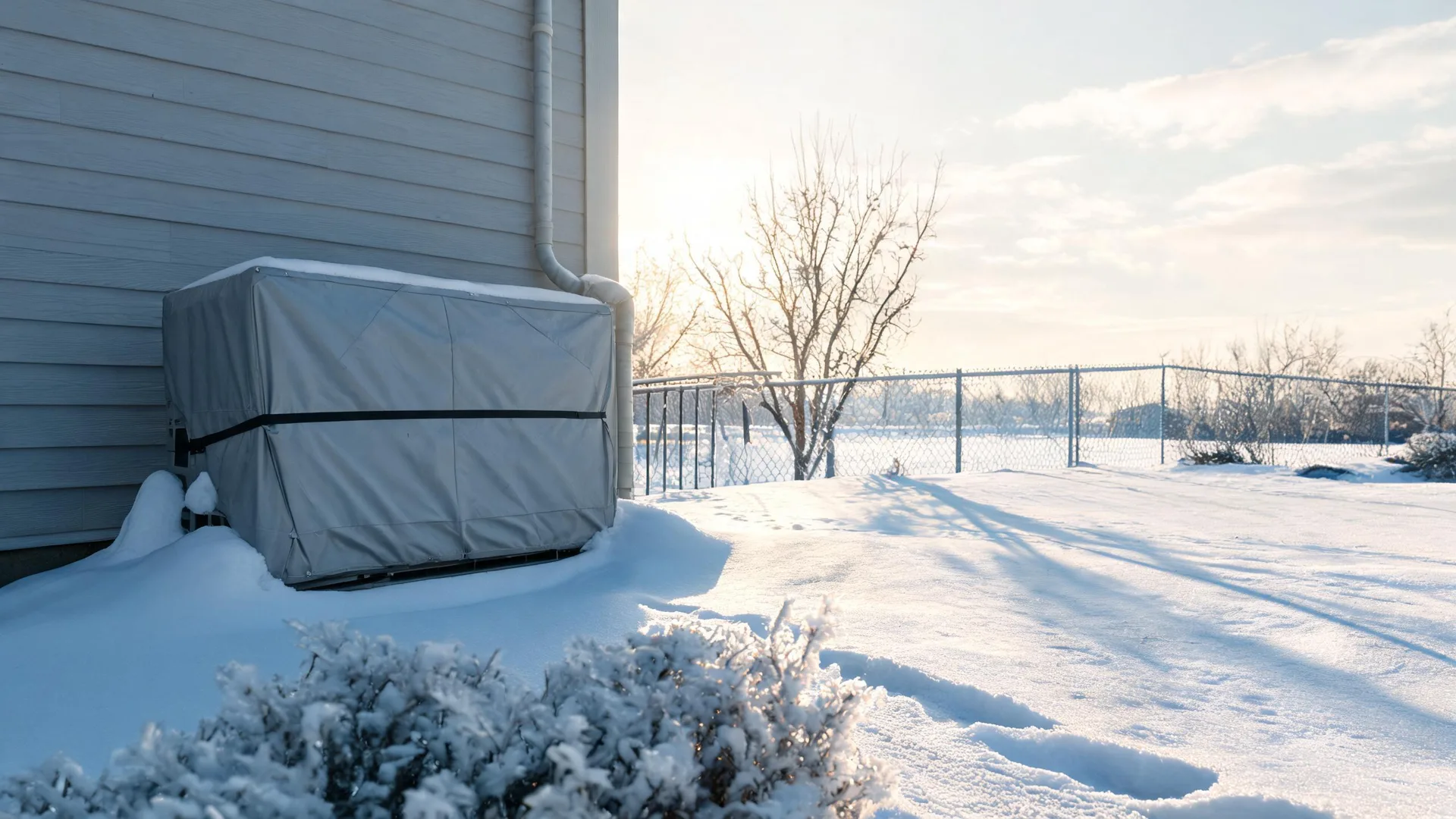
Don't pull the cover off the outdoor unit or touch anything inside it. If you see ice built up on the coil, that can be normal during a defrost cycle, so give it time before assuming something's wrong. A heat pump blowing air that feels cool in heating mode isn't necessarily broken either, since the air is often still warmer than the room even when it doesn't feel hot to your hand. If the breaker keeps tripping when you reset it, stop resetting it and call someone, since that usually points to an electrical fault worth having looked at rather than fixed by flipping a switch again.

A heat pump that's struggling doesn't fix itself by staying on. If the charge is low, running it short on refrigerant longer just means the compressor keeps working harder than it's built for, and that's the part you don't want to damage. A dirty coil or a weak capacitor causes the system to run longer to hit the same temperature, and that extra runtime wears on the same parts that already need help. Ice on the outdoor coil is normal during a defrost cycle, but ice that never clears is the system struggling to keep up, and running it in that state can let the ice build up further and block airflow entirely. None of this is true of every strange noise or short cycle. But a heat pump that's clearly not keeping up is usually worth turning off and calling about, rather than waiting to see if it sorts itself out.

A diagnostic visit starts outside at the unit itself. A contractor checks refrigerant pressure, looks at the compressor's amp draw, and checks the capacitor and contactor since those fail often and are easy to test. Inside, they'll check the air handler, the filter, and airflow across the coil, since weak airflow can look like a refrigerant problem when it isn't one. They'll also run the system in both heating and cooling to see if the reversing valve is switching the way it should, since a valve stuck in one position can mimic other failures. Most of this gets diagnosed with gauges and a multimeter, not by replacing parts to see what helps. By the end, you should have a straight answer on which part is failing and whether that part is worth fixing on this unit.