A row of illuminated white colonial houses with black shutters and a stone wall along a road at dusk.

Heat Pump Repair in Danielson, CT

Tell us about the job

Takes about a minute. No obligation.

RepairHeat PumpNortheastern Connecticut Planning Region, CT
Step 1 of 2

What ZIP code is the job in?

September is when a weak heat pump gets found out

Heat here runs October through May, about eight months straight. When a heat pump switches over in September and starts working harder, whatever was already marginal, a low charge, a failing contactor, a reversing valve that sticks, tends to show itself in the first cold snap.


The same goes for June before cooling starts

Cooling only runs July and August here, but the system still has to switch modes to do it. A heat pump that struggled at the end of last season usually has the same problem waiting in June. Getting it looked at before the first hot week means it gets fixed before it has to carry the full load.

8 months
October through May, your system heats
2 months
July through August, it cools
20°F
the average winter night it heats against
79°F
the average summer afternoon it cools against
Isometric line illustration of a cutaway house showing interior rooms with furniture, ceiling ductwork connected to an indoor air handler, and refrigerant lines running to an outdoor condenser unit on a pad.
Your system heats October through May and cools July through August.

NOAA 1991–2020 monthly normals

Danielson winters average 20°F overnight, not far below zero.

A heat pump here isn't fighting extreme cold for months on end, so most failures trace back to age or a worn part, not a system that was overworked.

Half the homes here were built by 1973

Half the homes here were built by 1973
Winter nights average 20°F
Power costs 28.75 cents a kWh statewide
Running a bad heat pump here costs more than fixing itConnecticut electricity ran 28.75 cents per kilowatt-hour in 2024

A diagnostic visit starts outside, at the outdoor unit. The tech checks refrigerant pressure, looks at the reversing valve, and watches whether the system actually switches between heating and cooling when asked to. Inside, they check the air handler, the filter, and whether the system is putting out the temperature rise it should. A lot of heat pump complaints trace back to the reversing valve sticking in one position, a failing capacitor that makes the compressor struggle to start, or a charge that has slowly dropped from a small leak. The tech will tell you which one it is, show you what they found, and lay out whether it is worth repairing or worth planning to replace, before any work starts.

A heat pump that hasn't been overworked is usually worth repairing

At 20°F overnight, your heat pump isn't working as hard as it would further north. A unit in otherwise decent shape has usually earned a repair rather than a replacement. Get the actual cause checked before deciding either way.

Find a contractor
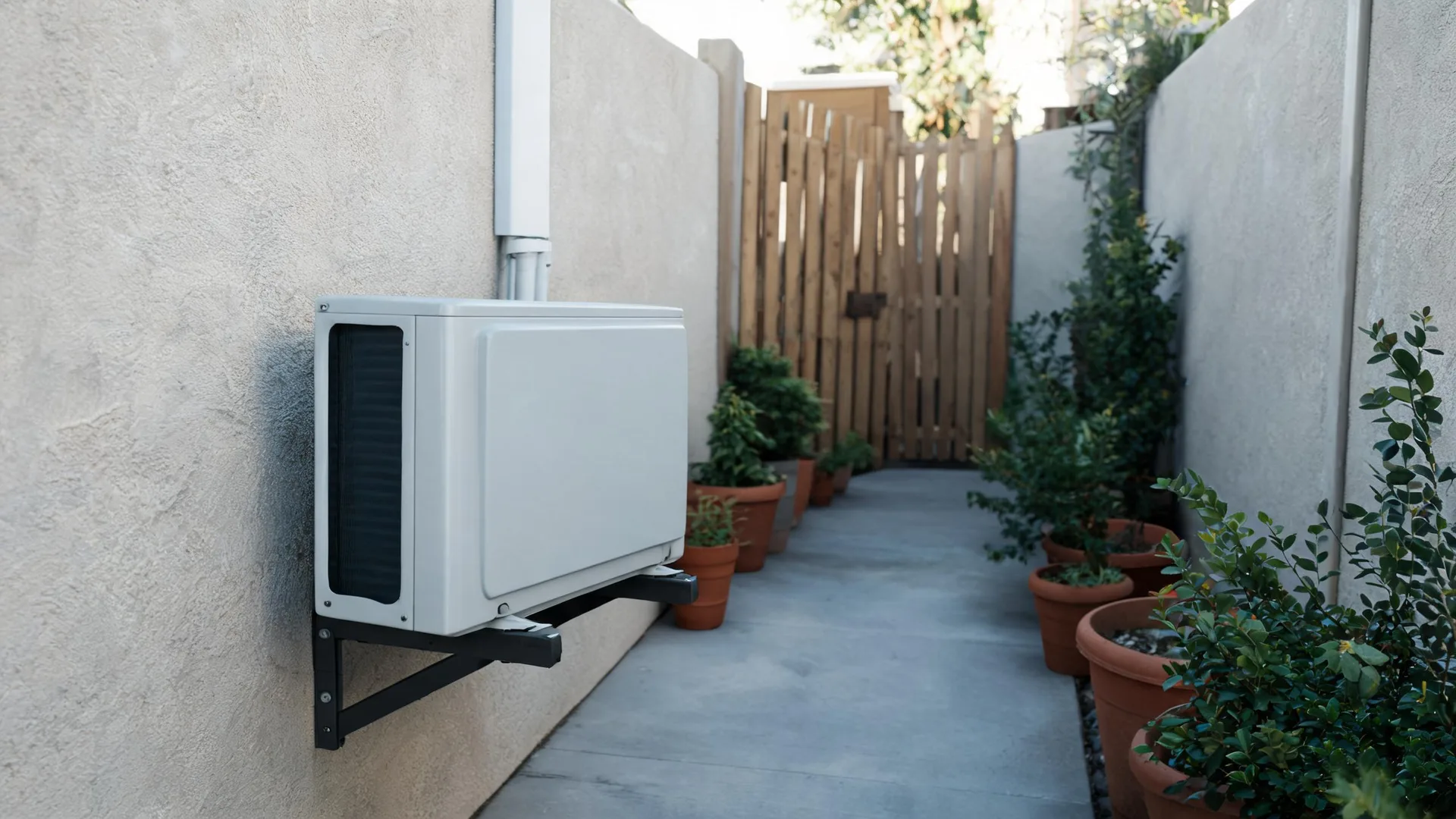
A white mini-split heat pump outdoor unit mounted on a concrete pad beside a gray-sided house, surrounded by gravel and green shrubs.

Ask how old the system is, not just what's wrong with it

If your heat pump came with the house, ask the tech for its age and condition as part of the visit, not just the fix for whatever's wrong right now. A system from a house built around 1973 or earlier is old enough that a big repair is a real question mark. One going into a newer home is a different case. Knowing which one you have is what tells you whether to pay for the repair in front of you or start planning for what comes after it.

The reversing valve is usually where it starts

A reversing valve is what lets a heat pump switch between heating and cooling. It moves every time the system changes direction, and that constant switching is what wears it. Once it sticks, the system can get stuck heating when you asked for cooling. It can also stop switching at all.

A compressor failure is rarely the first failure

By the time a compressor fails, something else usually caused it. A low charge can make it run hot. A weak capacitor can make it strain on every start. Catching that earlier failure is what keeps it from taking the compressor down with it.

A heat pump that's struggling still moves heat, so it's easy to let it ride. That's usually the wrong call. A compressor that's straining to start does it again on every cycle, and each hard start adds wear it doesn't shed later. A system running low on charge keeps pulling to make up for what it's lost, and that strain falls hardest on the compressor. A reversing valve that's partly stuck forces the system to work against itself. None of that heals on its own. It just gets asked to do the same job again tomorrow, a little worse than today.

A repair is worth doing when the fix addresses one part and the rest of the system is sound. A capacitor, a contactor, a reversing valve solenoid, these are parts that fail on their own, without taking anything else down with them. Replace the failed part and a heat pump in decent shape goes back to doing what it did before. Replacement starts to make sense when the compressor itself is the problem, since a compressor swap costs enough that it competes with putting in a new system outright. It also makes sense when the repairs keep coming, one part this year and another next, because that pattern usually means the system is wearing out generally rather than failing at one point. A tech who tells you which kind of problem you have is giving you the only information that actually decides this.