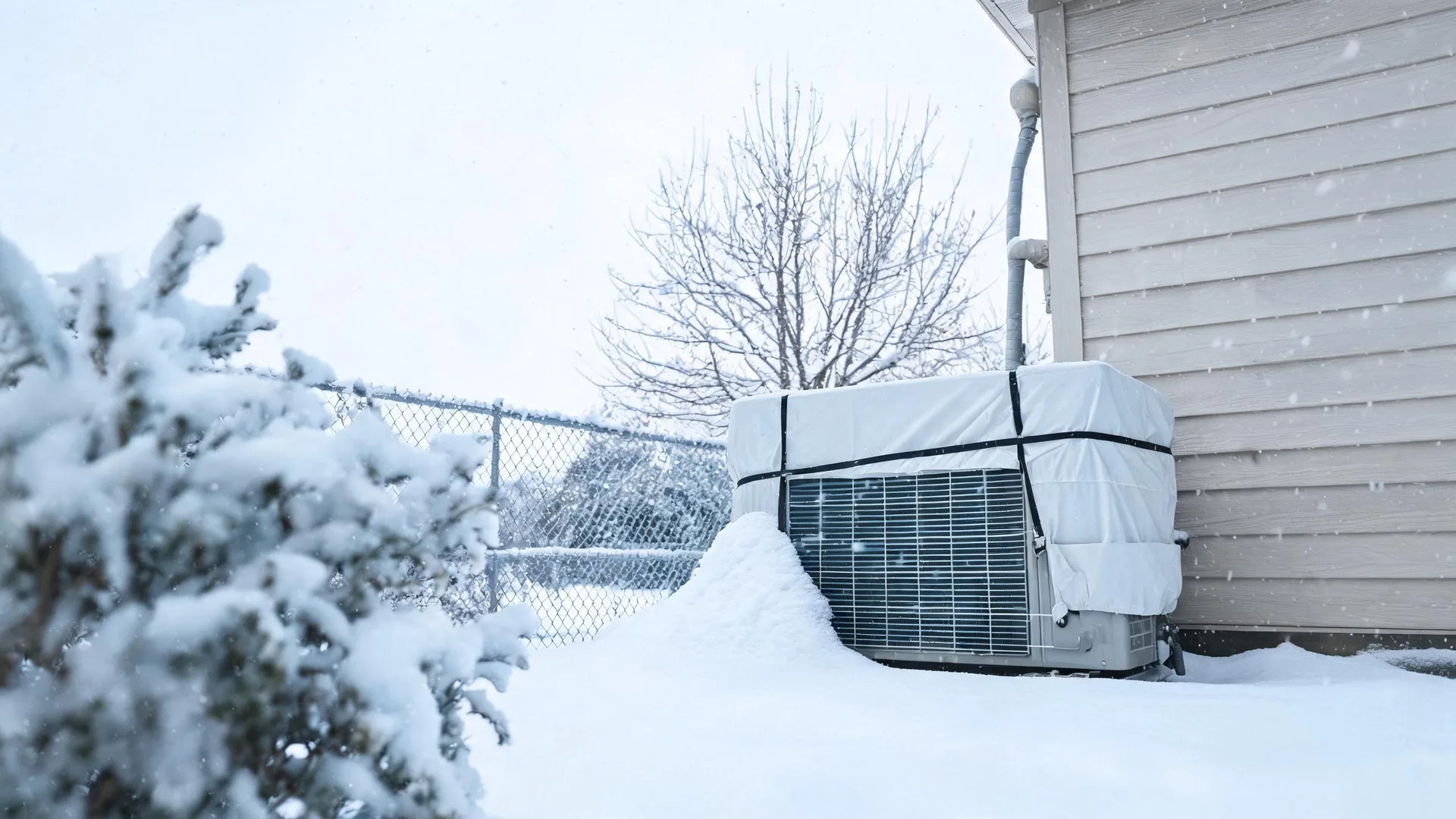
Winters here aren't extreme
Overnight lows in Bridgeport average 26°F across December, January and February. A heat pump works harder below freezing, but it isn't fighting single-digit cold for months at a time here.
Takes about a minute. No obligation.
Overnight lows in Bridgeport average 26°F across December, January and February. A heat pump works harder below freezing, but it isn't fighting single-digit cold for months at a time here.
A heat pump breaking down in a climate like this is more likely dealing with a worn part or a missed service than a system that's been run into the ground. That's worth knowing before you decide whether a repair makes sense.

NOAA 1991–2020 monthly normals
Heat pumps here run October through May, eight months of the year.
September is when a weak part gets found, right before the system has to carry the next eight months.



A heat pump doesn't need a disaster to stop working. Most repairs trace back to something ordinary, a worn contactor, a low refrigerant charge, a sensor giving the board bad information. None of that has much to do with Bridgeport weather. It's just what happens to a machine that runs most of the year. One thing worth knowing about Connecticut specifically, 20% of households here lost power for at least 24 hours in 2024. A heat pump that won't start after an outage often just needs its reset sequence run again, not a new part.
If your heat pump came with the house, it may be working against its age as much as anything else. Half the homes in this region were built in 1959 or earlier. A system that old has likely had more than one repair already, and the next one is worth weighing against how much life it has left. Before paying for a big fix, it's worth asking a contractor that question directly.
Find a contractor
Since the problem is usually wear or a missed service rather than weather, a repair is worth calling in a contractor to look at before you assume the worst. The 26°F average overnight low means the system isn't under constant strain, so a technician can often trace a breakdown to one part and fix it rather than finding the whole unit worn out from fighting the cold.
A heat pump has one part an air conditioner doesn't have. The reversing valve switches it between heating and cooling. When it sticks, the system can get stuck in the wrong mode, or it blows air that isn't the temperature it should be. It fails more than most parts simply because it works every single switch between heating and cooling, year after year.
The outdoor unit sits outside all year, and the coil on it has to stay clean to move heat properly. Dirt, leaves and ice buildup make it work harder than it should. That strain shows up later as a failed compressor or a burnt-out fan motor. A coil that gets checked and cleaned on schedule is one of the simpler ways to keep a heat pump from failing early.
Before you call anyone, a few things take only a minute and rule out the easy stuff. Check the thermostat is actually set to heat or cool the way you expect, and that the batteries aren't dead, it sounds obvious but it accounts for a real share of no-heat calls. Go to the breaker panel and look for anything tripped, the indoor unit and outdoor unit usually have separate breakers. Look at the outdoor unit itself, if it's packed with leaves, buried in snow, or iced over, that alone can stop it from working right. Check the air filter, one choked with dust cuts airflow enough that the system can shut itself down to protect the coil. If the system runs but the air doesn't feel right, check that nothing inside is blocking a vent or a return before you assume the worst.
A repair is almost always worth trying first. Most of what goes wrong on a heat pump, a bad capacitor, a failing contactor, a refrigerant leak, is a single part problem, and replacing that one part brings the whole system back. What changes the math is how often you've already been back for a different part. A system that keeps needing attention is telling you something different than one that's needed nothing until now. The compressor matters most here. It's the one part expensive and central enough that a failing compressor tips the decision toward replacement, while almost anything else is worth fixing. Age plays in too, but only alongside that repair history, not instead of it. A technician who tells you what actually failed, and whether that part tends to take others down with it, is giving you what you need to decide.