




White colonial houses with lit windows photographed at dusk along a tree-lined residential street.

Mini Split Installation in Waterbury, CT

Tell us about the job

Takes about a minute. No obligation.

New system or replacementMini-splitNaugatuck Valley Planning Region, CT
Step 1 of 2

What ZIP code is the job in?

Electricity in Connecticut ran 28.75 cents per kilowatthour in 2024, among the highest rates in the country. A mini split earns that cost back through how it runs. There's no ductwork losing air on the way to the room, and the compressor adjusts its speed to the load instead of switching fully on and off. Set one up right, sized to the room and installed by someone who knows the trade, and it holds its keep on every bill that follows.

8 months
October through May, your system heats
3 months
June through August, it cools
22°F
the average winter night it heats against
82°F
the average summer afternoon it cools against
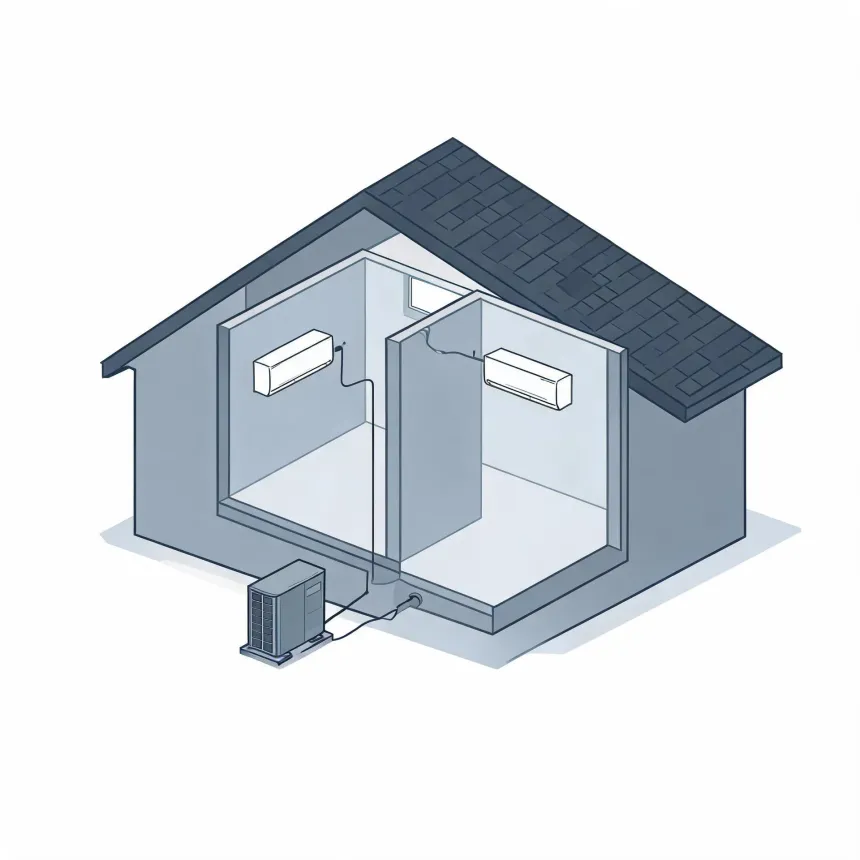
Isometric line illustration of a cutaway house with two rooms, each with a wall-mounted indoor air conditioning unit connected by lines to an outdoor condenser unit on the ground outside.
Your system heats October through May and cools June through August.

NOAA 1991–2020 monthly normals

Half the homes in Naugatuck Valley Planning Region were built in 1969 or earlier.

A mini split going into a house that age has to be sized to the rooms it actually has, not to a generic load number.

Three months of summer work is not much to ask of a system

Cooling runs June through August
Summer afternoons average 82°F
Power costs 28.75 cents a kWh statewide

A mini split doesn't need much to get sized right. The room it's heating and cooling, the windows it has, how it's insulated. Nothing about Waterbury changes that math. One outdoor unit paired with the right indoor heads, sized to the space, is the standard approach here same as anywhere else. Twenty percent of Connecticut households lost power for at least a day in 2024, and a mini split doesn't change that math either. What it does is come back on by itself once power returns, no relighting or resetting needed.

Get it installed before June, not during the first hot week

Cooling here runs June through August. May is the month before it starts, and that's when this job is easiest to get right, sized and set up without the pressure of a house already running warm.

Find a contractor
A white outdoor air conditioner condenser unit mounted on metal wall brackets against gray horizontal siding, with a blue sky and white clouds behind it.

Light duty doesn't mean no upkeep

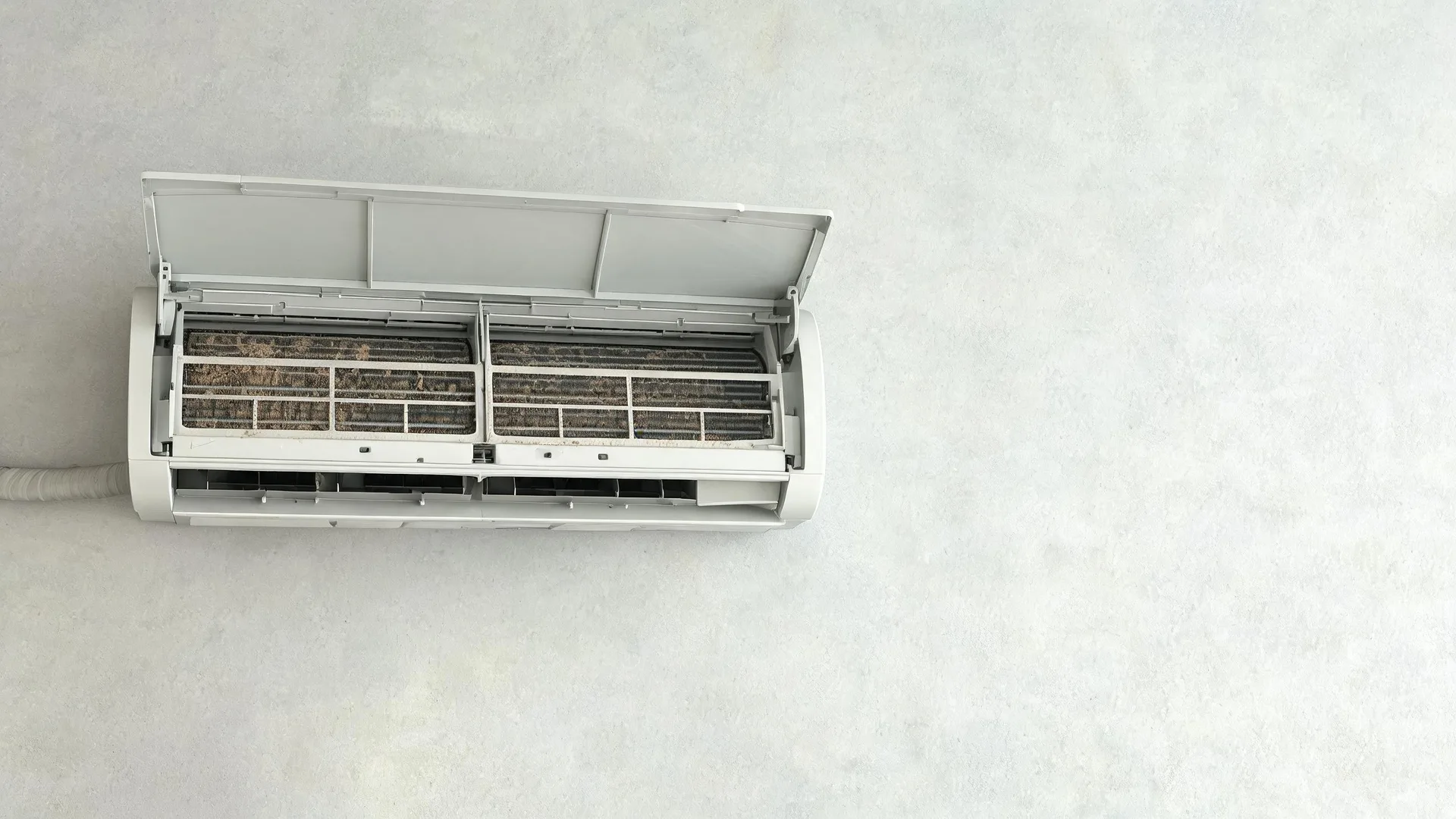
A compressor that runs light duty most of the year still sits outside through every season, carrying whatever the weather does to it. Cold doesn't hurt it the way standing idle can. A system that goes long stretches without running benefits from an occasional cycle, because the oil inside the compressor needs to circulate to keep seals from drying out. Most of these units start themselves briefly for exactly that reason, a short burst with no heating or cooling call behind it. Left alone, the system looks after that part on its own. What it can't do on its own is stay clean. Fewer running hours doesn't mean dust stops settling on the coil or building up in the filter. A mini split that sits more than it runs still needs that filter checked.

The line set and where the outdoor unit sits

The cost climbs with the distance between the outdoor unit and the indoor head, and with anything that line set has to get around. A straight run through an exterior wall is the simple case. A run up through a chase, around a corner, or up several stories costs more in labor and material before anyone talks about the equipment itself.
One head or several off the same outdoor unit

A single zone system is the simplest install there is, one indoor head matched to one outdoor unit. Add zones and you add indoor heads, more line set, more wall penetrations, and a outdoor unit sized to carry all of them at once. Each zone added is its own small install, not an afterthought.

The label on a mini split carries a SEER2 number and a HSPF2 number, cooling and heating rated separately. That number is a ceiling, not a guarantee. It's measured in a lab, at a fixed load, with the equipment running exactly as designed. A unit sized wrong for the room it's in will never see that number no matter how high it's rated, because the compressor is short cycling or straining instead of running the steady, modulating pattern the rating assumes. A lower rated unit installed right, with the line set done cleanly and the head matched to the room, often beats a higher rated one installed poorly. The rating tells you what the equipment is capable of. It doesn't tell you whether the install lets it get there.

Installation starts with a walkthrough of where everything goes, the indoor head, the outdoor unit, and the path between them. The crew mounts the indoor head on its bracket, then drills through the wall for the line set, a small hole compared to what people expect. Refrigerant lines, a condensate drain, and electrical wiring all run through that one penetration. Outside, the compressor sits on a pad or wall bracket, away from anything that blocks airflow around it. Once everything is connected, the line set gets evacuated with a vacuum pump to pull out air and moisture before refrigerant ever flows. That step matters more than people think, because moisture left in the lines causes problems the warranty won't cover. After that, the system gets charged, tested in both heating and cooling, and checked for the airflow and temperature split that tell a tech it's running the way it should.