Electricity here runs 28.75 cents per kilowatthour
Connecticut's electric rates sit well above the national average. A mini split's efficiency rating matters more on a bill like that than it would somewhere power is cheap.
Takes about a minute. No obligation.
Connecticut's electric rates sit well above the national average. A mini split's efficiency rating matters more on a bill like that than it would somewhere power is cheap.
Mini splits carry a wide range of efficiency ratings. Two systems that cost the same to install can cost very different amounts to run every month after.
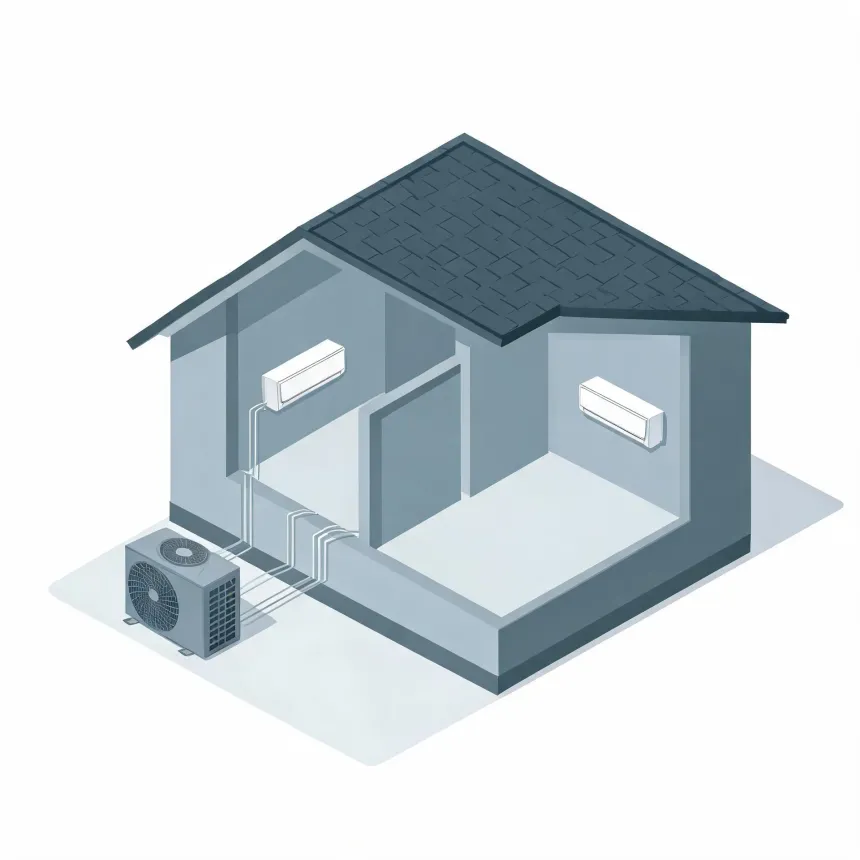
NOAA 1991–2020 monthly normals
Cooling in Norwich runs June through August.
Have the mini split in before May ends, so it's ready and not a rush job.



Half the homes in Norwich and the surrounding region were built in 1969 or earlier. A house that age can still have the wiring or wall construction it was built with, or it may have been updated long since. That's worth checking before installation, since it affects where a mini split's lines and mounts can run. It doesn't mean the house needs a different system. It means the install has to work with what's actually there instead of what's assumed.
Fuel oil heats more homes in this region than any other fuel, and electricity comes second. A mini split doesn't replace the oil furnace, it takes over jobs like cooling in summer and the mild weeks in spring and fall. For a home already set up for oil heat, adding a mini split is a smaller job than switching the whole house to one fuel.
Find a contractorCooling runs three months here, June through August, with afternoon highs averaging around 80. That's a short season and a mild one. A mini split sitting idle the rest of the year doesn't pick up the wear that drives most repairs. What fails early in this kind of system is usually an install done wrong, or years of skipped filter cleaning, not the compressor giving out from overuse. A unit with a middling rating will hold up fine against a load this light.
If the home has a furnace or boiler handling heat, that system stays right where it is. A mini split installation adds new indoor and outdoor units and new line sets. It doesn't require tearing out ductwork or disconnecting what's already heating the house.
If what's being replaced is an older ductless system, the outdoor unit and the line set usually get removed along with the indoor heads. A contractor can tell you whether old mounting brackets or line locations can be reused or whether the new install needs its own path through the wall.
Sizing a mini split comes down to matching the unit's output to the heat gain and heat loss of the specific room or space it's serving, not the square footage alone. A contractor works through the window area, insulation, ceiling height, and how many walls face outside before landing on a number. Too big and the unit short cycles, cooling the room fast and shutting off before it pulls the moisture out of the air, which leaves the space feeling clammy. Too small and it runs flat out on the hottest days and still can't keep up. Multi-zone systems add another layer, since the outdoor unit has to be sized for the heads it's feeding, not just added up head by head. This is also why a unit sized for one room shouldn't just get copied into the next one down the hall.
Installation day starts with the outdoor unit and where it sits. It needs clear space around it for airflow and a spot where condensate can drain away from the foundation. Inside, the mounting plate goes up first, usually high on a wall, and that location is picked before anyone drills so the line set has a clean, short run to the outside. The hole through the wall is angled slightly so it drains outward, not in. Once the lines are run, the system gets evacuated with a vacuum pump to pull out air and moisture before the refrigerant is released into the lines. Skipping that step is one of the few things that causes real trouble down the road, since trapped moisture or air in the line set can damage the compressor over time. After that it's a matter of wiring the indoor head to power, mounting it on the plate, and testing that it cools, heats, and communicates properly with the outdoor unit before anyone calls the job done.