



A gray tabby cat sleeps curled up on a dark gray bed in a dimly lit modern bedroom with warm ceiling cove lighting and a wall-mounted air conditioning unit.

Mini Split Installation in Middletown, CT

Tell us about the job

Takes about a minute. No obligation.

New system or replacementMini-splitLower Connecticut River Valley Planning Region, CT
Step 1 of 2

What ZIP code is the job in?

Connecticut homeowners paid 28.75 cents per kilowatthour in 2024, among the highest electric rates in the country. A mini split's efficiency matters more here than it would somewhere with cheap power. These systems use a variable-speed compressor that adjusts its output to the room instead of switching fully on and off like older systems do, so they draw less power to hold a temperature once they reach it. At this rate per kilowatthour, that difference in how hard the compressor works shows up on the bill every month the system runs.

8 months
October through May, your system heats
3 months
June through August, it cools
23°F
the average winter night it heats against
82°F
the average summer afternoon it cools against
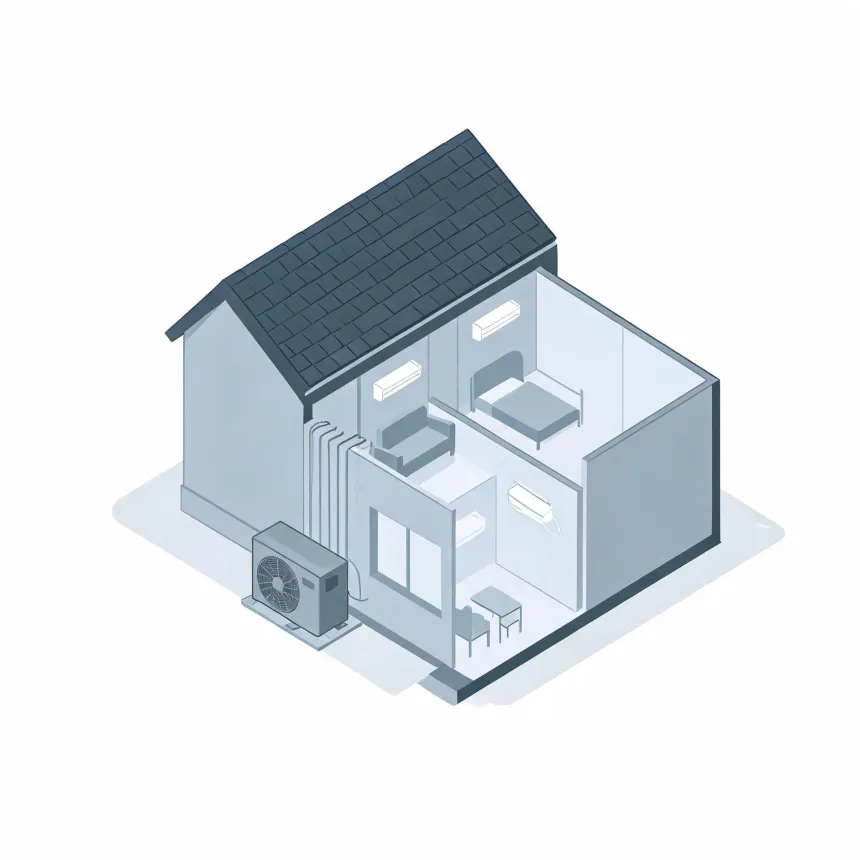
Isometric illustration of a cutaway house with a dark shingled gable roof, showing interior rooms with a bed, chairs and table, three wall-mounted mini-split indoor units connected by line sets to an outdoor condenser unit on a pad outside.
Your system heats October through May and cools June through August.

NOAA 1991–2020 monthly normals

Cooling here runs June through August.

May is the month to get a mini split installed, before the first hot stretch hits and installers get booked solid.

A standard mini split, sized normally, is the right call here

20% of homes statewide lost power a day or more in 2024
Cooling runs June through August
Summer afternoons average 82°F

Half the homes in this region were built in 1972 or earlier. A house that age usually wasn't designed with ductwork for central air, which is part of why mini splits make sense here. But the walls and the rooms you're conditioning are also older, and a mini split sized for a new build won't necessarily match them. The installer needs to size each indoor unit to the room it's actually heating and cooling, not to a average. If your system came with the house or was added later, that's worth checking before you assume the old sizing still fits.

Adds cooling and backup heat without replacing the oil furnace

More than half the homes in this region heat with fuel oil, and a mini split doesn't replace that furnace. It adds cooling for summer and a second way to heat the rooms you use most, without touching the oil system the rest of the house relies on.

Find a contractor
A white outdoor air conditioner condenser unit mounted on metal wall brackets against gray horizontal siding, with a blue sky and white clouds behind it.

Three months of work a year

Three months of cooling a year, and the afternoon high averages 82 in those months. That's not a hard pull on a mini split. A compressor built to run June through August against mid-80s heat isn't working near the edge of what it can do, so you don't need the highest-efficiency model on the lot to get a system that holds up. A mid-range unit sized right for the room will do the job here for years. Where it fails is usually the installer cutting corners on the line set or the sizing, not the machine losing a fight with the weather.

The old system usually stays put

If the house heats with oil, a mini split goes in alongside the furnace, not in place of it. There's nothing to remove and nothing to haul away. The furnace keeps running the rest of the house, and the mini split handles the rooms it's installed in.
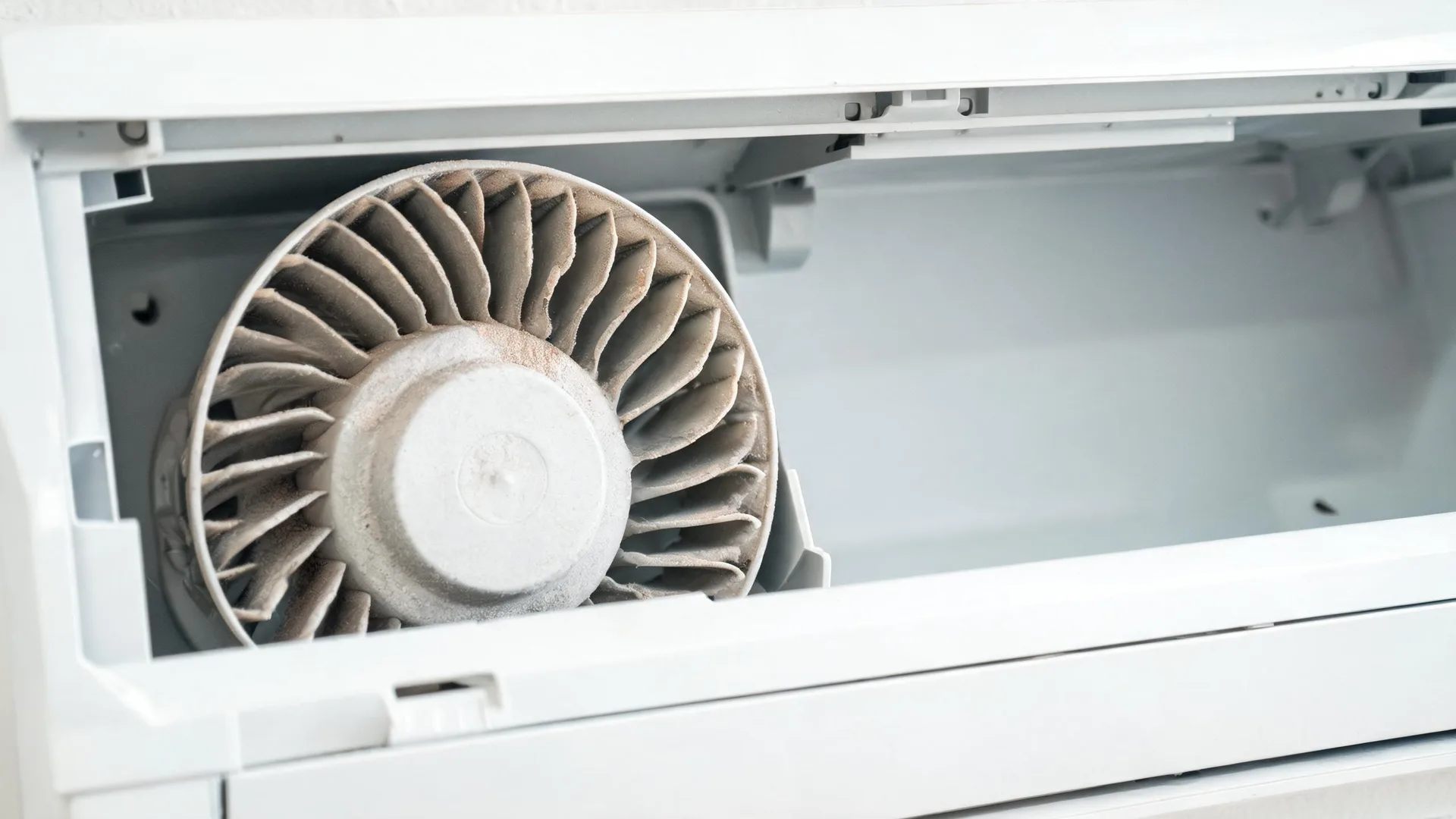
A removal is a different job

If what's coming out is an old window unit or an existing ductless system, that teardown is its own step before the new equipment goes in. The outdoor condenser gets disconnected and hauled off, and any abandoned line set or wiring needs to be dealt with so it doesn't sit behind the wall unused.

Sizing a mini split starts with the room, not the unit. An installer measures the space, checks how many windows it has and which way they face, looks at the ceiling height, and figures out how much heat that room gains in summer and loses in winter. That math has a name, a load calculation, and it's what tells you which indoor unit goes where. Guess at it instead, and you get a system that either can't keep up on the hottest day or short cycles, switching on and off faster than it should because it's too big for the room. A short cycling compressor wears out sooner and leaves the room clammy, since it never runs long enough to pull the moisture out of the air. Bigger isn't safer here. The unit that matches the room is the one that works.

What you pay for in a mini split install is mostly labor, not the box on the wall. Running the line set between the outdoor condenser and each indoor head takes time, and that time goes up with distance, with how many walls get penetrated, and with how many indoor heads the system has. A single-zone system with a short run to one room is a different job than a multi-zone system feeding heads in separate rooms on separate floors. Electrical matters too. The outdoor unit needs its own circuit, and if the panel doesn't have room for it, that's its own piece of work before the mini split itself goes in. Where the condenser sits outside and where each head goes inside also drive cost, since awkward placement means more time running line set through framing instead of a straight shot. None of this shows up on the unit's price tag. It shows up in how the crew has to route around the house you actually have.