




A two-story red brick house with black shutters and a dark roof sits behind a mown lawn, large deciduous trees, and a dry-stacked stone wall in the foreground.

Mini Split Installation in Hartford, CT

Tell us about the job

Takes about a minute. No obligation.

New system or replacementMini-splitCapitol Planning Region, CT
Step 1 of 2

What ZIP code is the job in?

Connecticut electricity ran 28.75 cents per kilowatthour in 2024, well above what most of the country pays. A mini split works in your favor here because it only moves heat, it doesn't burn fuel to make it, and it cools or heats one room at a time instead of pushing conditioned air through a house full of ducts that leak along the way. That matters most in a Hartford summer and winter, when the system is working hard for months at a stretch. The efficiency rating on the unit you choose is doing real work every time it cycles on, not just sitting on a spec sheet.

8 months
October through May, your system heats
3 months
June through August, it cools
21°F
the average winter night it heats against
81°F
the average summer afternoon it cools against
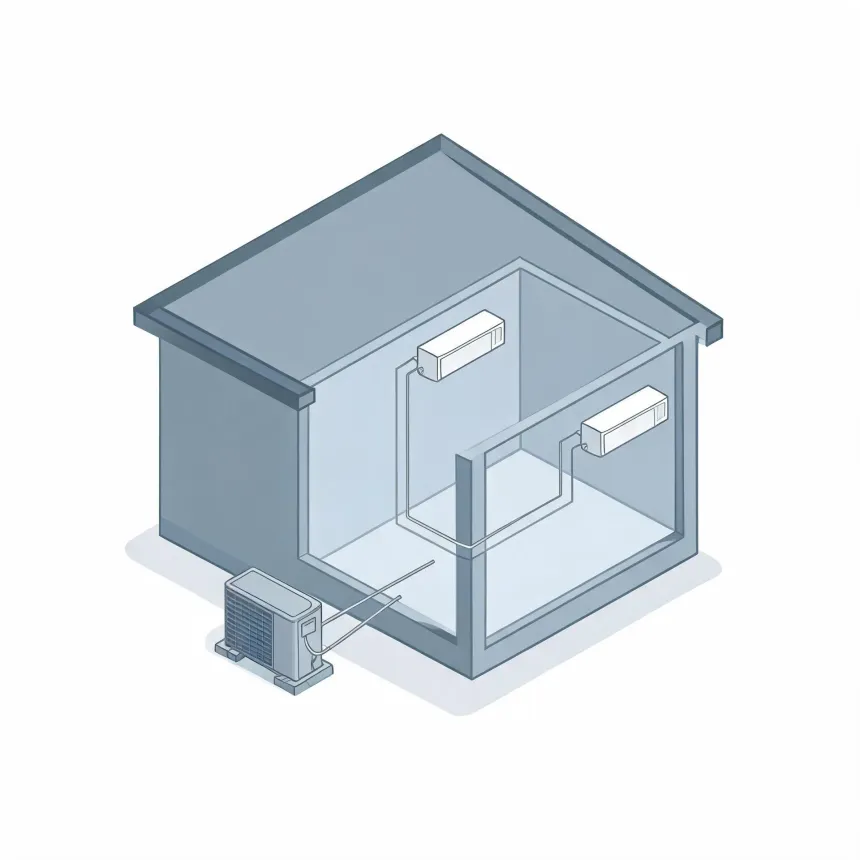
Isometric line illustration of a cutaway building interior with two wall-mounted indoor air conditioning units connected by piping to an outdoor condenser unit on the ground outside.
Your system heats October through May and cools June through August.

NOAA 1991–2020 monthly normals

Cooling runs June through August here.

Get a mini split installed before June and you're not rushing a decision you'll live with for years.

Gas heats 46.4% of homes here, more than anything else

46.4% of homes heat with gas
Cooling runs June through August
Summer afternoons average 81°F

Three months of cooling a year is not much to ask of a system. Summer afternoons here average 81°F, which is warm but not punishing, so the compressor isn't straining to chase down a hot box all day. That gives you room to pick a mini split for what it does well rather than chasing the highest efficiency number on the shelf. A reliable unit sized right for the room will handle a Hartford summer without much trouble. Where the load is light, what matters more is a clean installation and a system that holds up, not the last point or two of SEER2.

A standard mini split fits this house fine

A standard mini split, sized and installed correctly, handles a Hartford home without trouble. The one thing worth planning for is the power going out. 20% of Connecticut households lost power for at least 24 hours in 2024, and a mini split won't run through that any more than a furnace or central AC would. That's a reason to get the system in and working, not a reason to size it differently.

Find a contractor
A white outdoor air conditioner condenser unit mounted on metal wall brackets against gray horizontal siding, with a blue sky and white clouds behind it.

Built in 1966 or earlier, half these homes were never set up for central air

Half the homes in this region were built in 1966 or earlier. A mini split doesn't care how old the house is, since it needs no ductwork, just a line set run through an exterior wall and a spot outside for the condenser. That makes it a fit for a house that was never built with central air in mind. What matters is matching the unit, or units, to the rooms you're actually conditioning, not retrofitting the house to the system.

The rating is a best case number

The SEER2 and HSPF2 numbers on the label get measured under set lab conditions, not in your living room. Real output moves with the outdoor temperature, how the installer sets the refrigerant charge, and whether the line set run is long or has a lot of bends. The same unit can perform differently from one installation to the next.
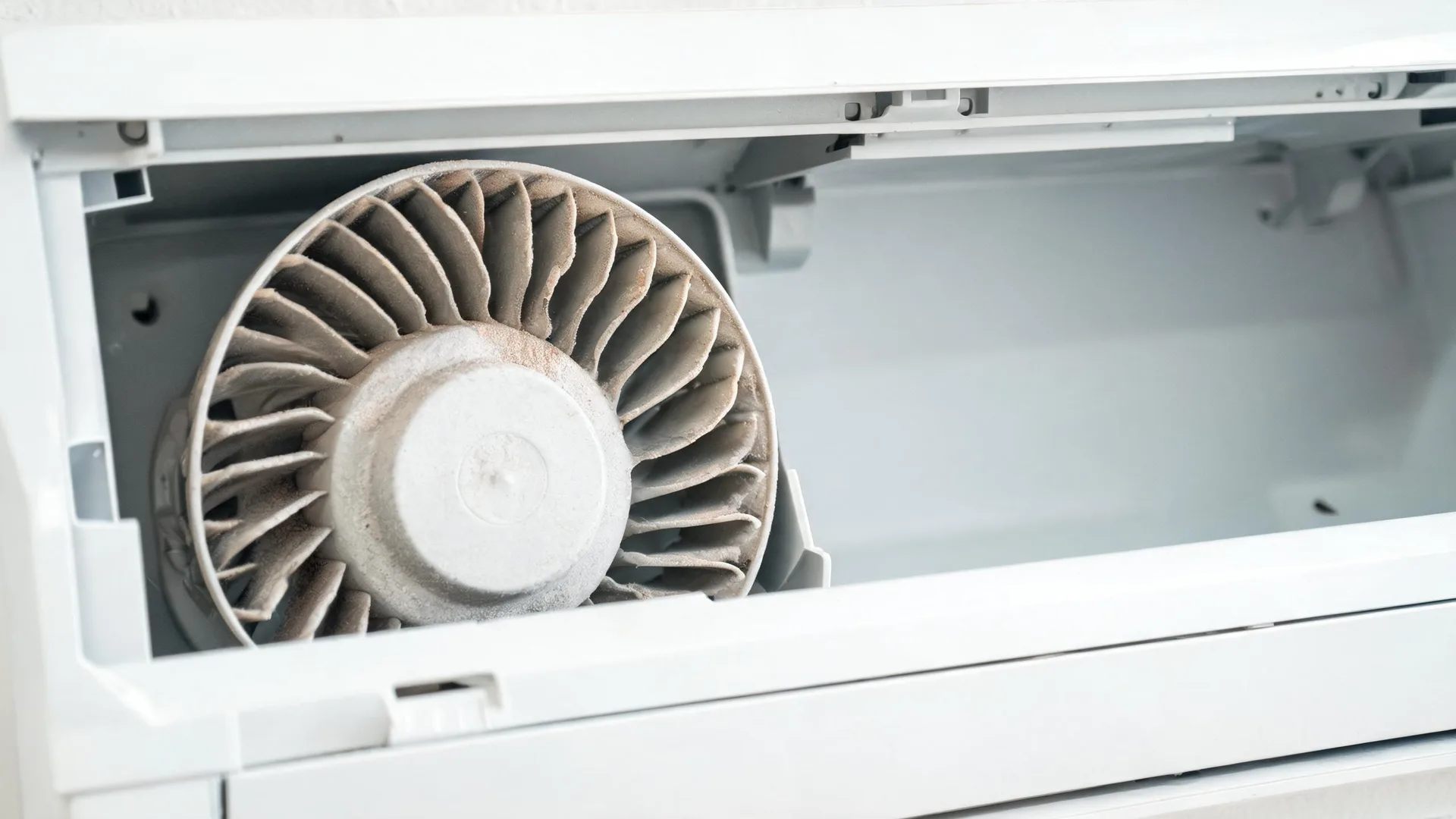
The rating only pays off if the sizing is right

A mini split that's too big for the room cycles on and off instead of running steady, and short cycling wastes energy no matter what the label says. One that's too small runs constantly and still struggles to hold the temperature. The efficiency number only means something once the unit is matched to the room it's heating or cooling.

The price of a mini split installation comes down to how much work it takes to get refrigerant from the outdoor unit to the indoor head, and how many heads the house needs. A short, straight line set through one exterior wall is a different job than a run that has to climb, turn corners, or reach a second floor. Every indoor head needs its own line set, its own refrigerant connection, and its own spot on an exterior wall for the penetration, so conditioning several rooms costs more than conditioning one, simply because each additional head multiplies that work. The condenser needs a pad or bracket outside and enough clearance around it to pull air through the coil. Electrical work matters too. A mini split needs a dedicated circuit, and if the panel doesn't have room for one, that's its own job before the system goes in at all. None of this shows up on the unit's spec sheet, but it's most of what an installer is pricing when they look at the house.

Installation day starts outside and in. One person mounts the indoor head on its wall bracket while another sets the condenser on a pad outside. Between them runs the line set, carrying refrigerant lines, a drain line and electrical wiring through a single hole drilled in the exterior wall. That hole gets sealed as soon as the lines pass through it. Once everything is connected, the installer pulls a vacuum on the lines to clear out moisture and air, because either one left behind will damage the compressor over time. The system only gets its refrigerant charge once that vacuum holds. From there it's power to the unit, a test run in both directions if the system heats and cools, and a check that the indoor head drains condensation the way it should.