





A golden retriever sleeps on a neatly made bed in a minimalist bedroom equipped with a wall-mounted air conditioning unit.

Mini Split Installation in Bridgeport, CT

Tell us about the job

Takes about a minute. No obligation.

New system or replacementMini-splitGreater Bridgeport Planning Region, CT
Step 1 of 2

What ZIP code is the job in?

Connecticut electricity ran 28.75 cents per kilowatt-hour in 2024, among the highest rates in the country. A mini split runs on electricity, so how efficiently it turns power into heating and cooling matters more here than somewhere paying less per kilowatt-hour. Its compressor adjusts speed to match the load instead of switching fully on and off, which is where most of the savings come from. Two systems can look the same in a showroom and cost very differently to run every month after. At this rate, the efficiency rating on the unit is worth reading closely before you decide.

8 months
October through May, your system heats
4 months
June through September, it cools
26°F
the average winter night it heats against
81°F
the average summer afternoon it cools against
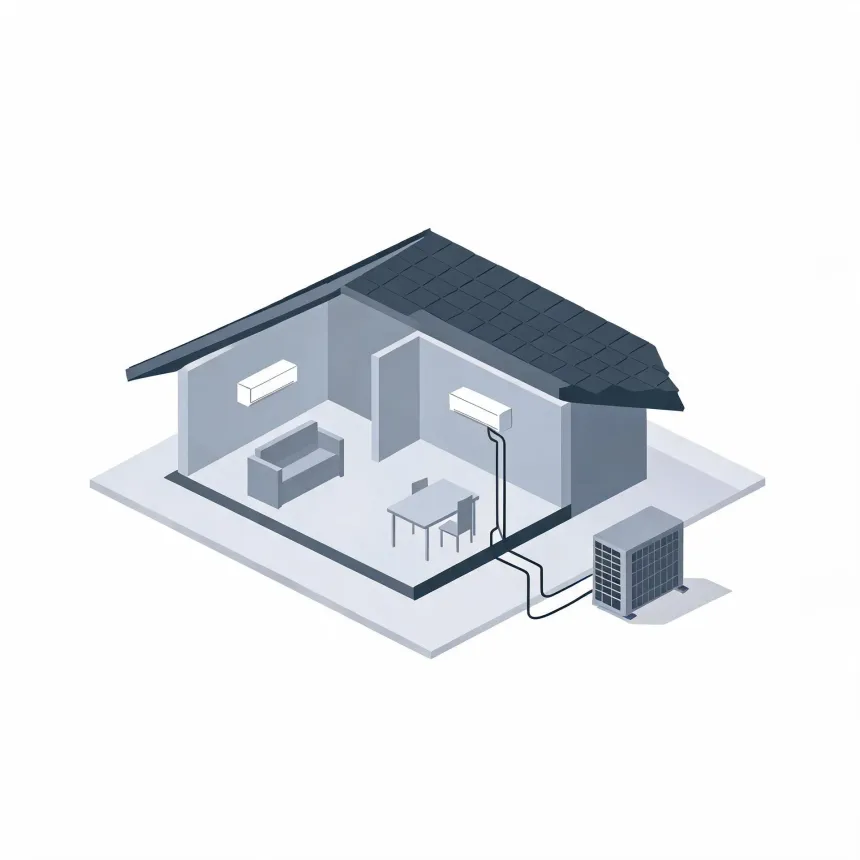
Isometric illustration of a cutaway house interior with sofa, table and chair, two wall-mounted indoor air conditioning units connected by lines to an outdoor condenser unit beside the building.
Your system heats October through May and cools June through September.

NOAA 1991–2020 monthly normals

Cooling runs June through September here, about four months a year.

Get the mini split in before May, so install day is your choice and not a scramble during the first hot week.

Half these homes were built in 1959 or earlier, and a mini split has to work with the walls it gets

Half the homes here were built by 1959
Cooling runs June through September
Summer afternoons average 81°F
A standard system does the jobNothing about Bridgeport's climate or power grid calls for sizing up

Ask to see the efficiency rating in writing before you sign anything, not just the brand name on the brochure. Two installers can quote the same size mini split for the same room and mean two different units inside that housing. At 28.75 cents a kilowatt-hour, the gap between a mid-range rating and a high one shows up on every bill afterward, not just the first. The number to ask for is the SEER2 rating, and it belongs on the paperwork, not just the installer's word.

Efficiency pays here

Power costs more here, so an efficient system pays you back on every bill.

Find a contractor
A white mini-split air conditioner outdoor condenser unit mounted on metal brackets against a beige stucco exterior wall, with a blue sky and scattered clouds in the background.

Sized for the room, not guessed at

A mini split that's too big cools the room fast, then shuts off before it pulls the moisture out of the air. The room feels clammy even at the right temperature, and the compressor spends its life cycling on and off instead of running steady. That on and off cycling is harder on the parts than long, even runtime. Too small, and it runs flat out on the hottest and coldest days and still can't keep up. Sizing it right means a room by room look at square footage, window area, insulation and what's on the other side of each wall, not just a number pulled from a chart. Done right, the system settles into long, low, steady runs instead of short bursts, and that's what it's built to do.

How many rooms it's covering

A single zone with one indoor head is a simpler job than a multi-zone setup running several heads off one outdoor unit. Each indoor head needs its own line set run and its own spot on the wall, and every zone added means more refrigerant line, more wall penetrations and more labor to get right.
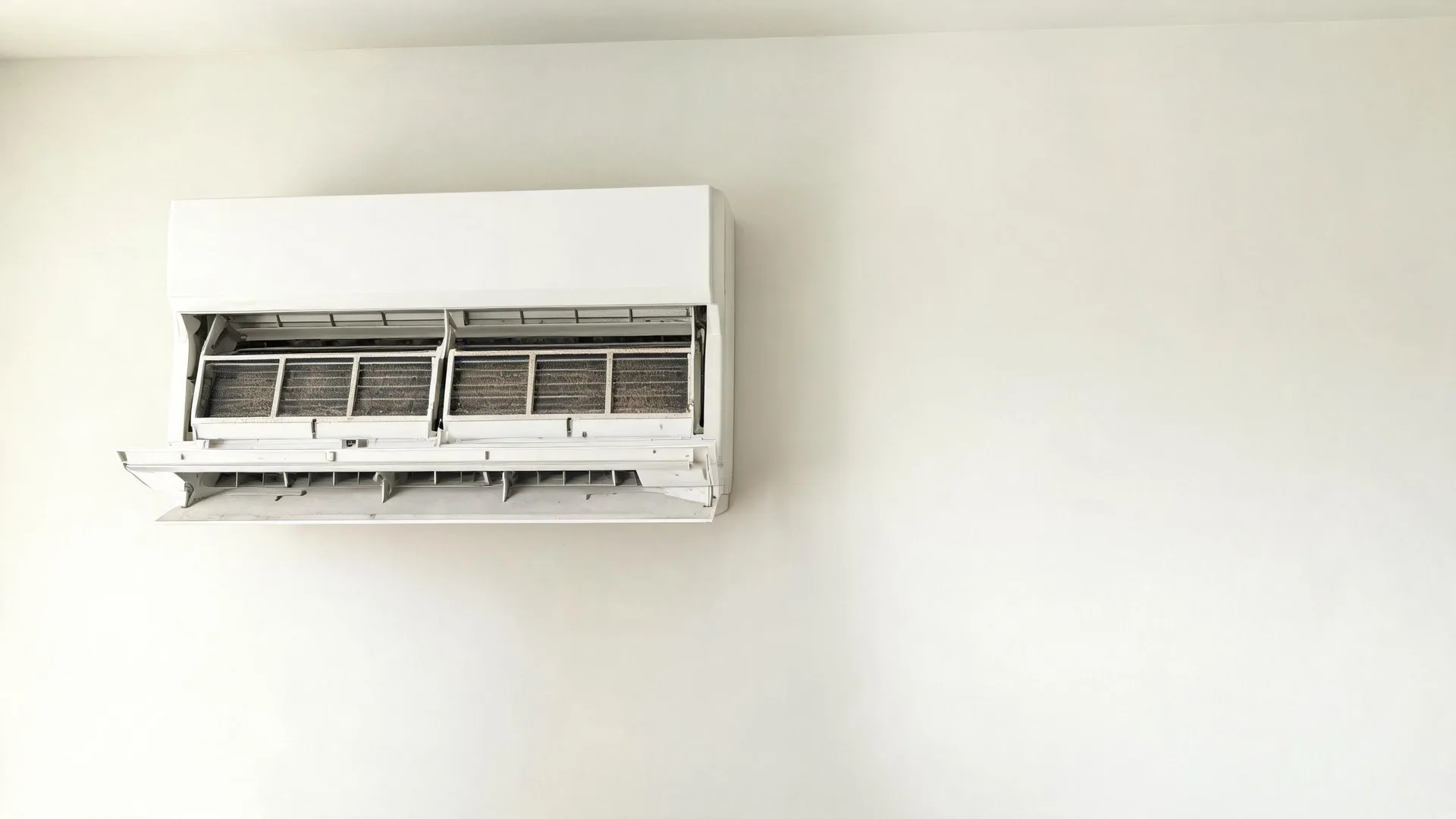
What the line set has to get through

The refrigerant lines run from the outdoor unit to each indoor head through a wall, and the path matters. A straight shot through an exterior wall is quick work. A longer run, a run through framing that forces a detour, or a unit placed far from where the indoor head needs to go all add length and labor the straight shot wouldn't.

The old system does not come back once the new one goes in, and that matters if it's a central system being replaced by mini splits. An old furnace or air handler sitting unused still takes up the closet or basement space it always did, and someone has to decide whether it comes out or stays put as backup. If there's an old condenser outside, that gets disconnected and hauled away as part of the swap, not left to rust next to the new one. Any ductwork tied to the old system can usually stay in place even if the mini splits don't use it, in case a future owner wants central air again. Old refrigerant lines from a prior system get capped or removed, not reused, since mini splits run their own dedicated line sets sized for the new equipment.

Install day starts outside and in, at the same time. One crew member mounts the outdoor unit on its pad or brackets while another marks where each indoor head goes on the wall, usually high up where air can sweep the room. The hole through the wall for the line set is small, just big enough for the refrigerant lines, a drain line and the electrical whip to pass through together. Once that penetration is sealed, the lines get connected at both ends and the system is pressure tested before anyone adds refrigerant, which catches a bad connection before it becomes a slow leak nobody notices for a year. After that it's a vacuum on the line set to pull out moisture and air, then the charge goes in and the indoor head gets mounted on its plate. Last comes power, a test run in both heating and cooling, and a check that each zone is actually reading and responding to its own thermostat or remote.